
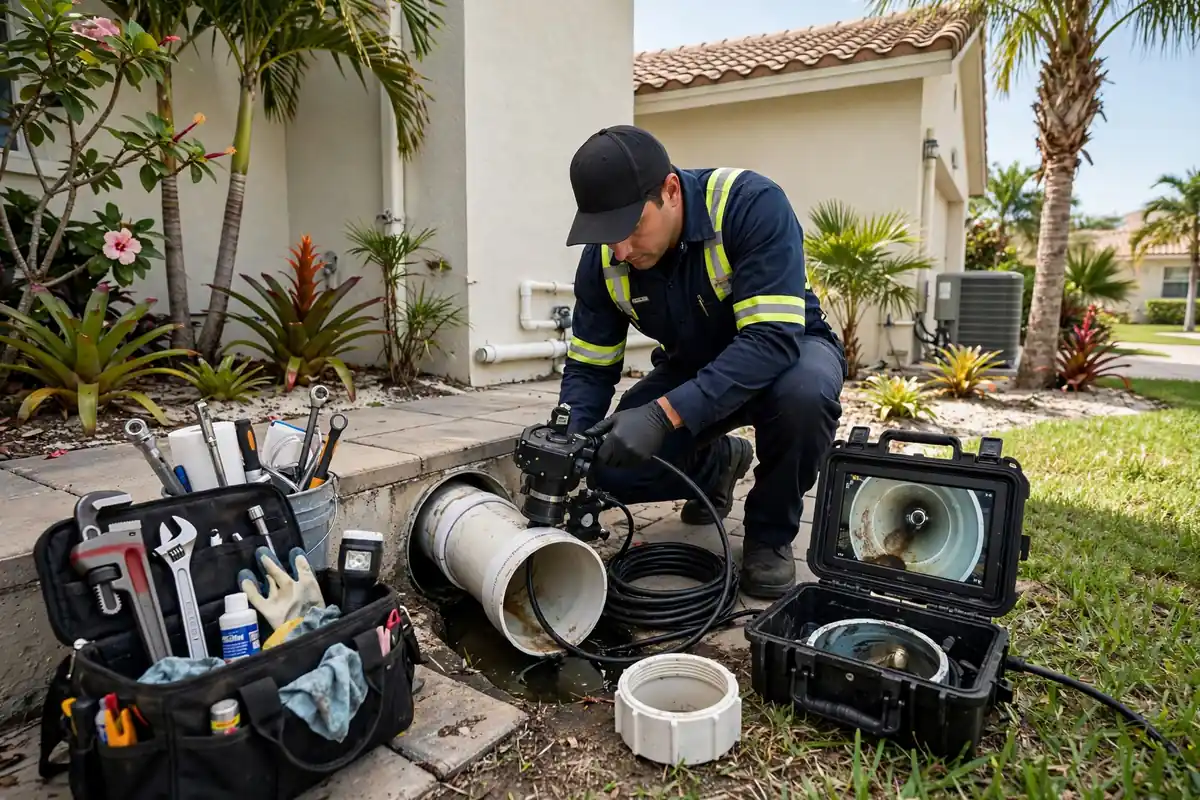
A sewer failure at a restaurant, office building, or retail plaza does not just smell bad — it stops revenue cold. Health codes, tenant complaints, and closure orders turn a plumbing problem into a business emergency within hours. Commercial sewer line services exist to keep that from happening, with inspections, preventive schedules, and repair methods scaled to bigger pipes and busier buildings.
This guide explains what commercial sewer service looks like in Coconut Creek and the surrounding South Florida market: the differences from residential work, what a maintenance agreement should include, and how to respond when a backup hits during business hours. Whether you manage a strip mall or own a single restaurant, the fundamentals are the same.
How Commercial Work Differs From Residential
Commercial sewer lines run larger diameters, longer distances, and far higher daily flows than a home's lateral. Grease from restaurant kitchens, paper products in office restrooms, and debris from loading docks all load the system differently than a family's wastewater. Camera equipment, cleaning nozzles, and lining materials all scale up accordingly, and access points are often in parking lots or utility corridors rather than side yards.
Scheduling differs too. A home repair can happen any weekday; a commercial job may need overnight or weekend hours to avoid disrupting customers and staff. Permits, traffic control for street-side access, and coordination with property managers add layers a residential crew never touches. That is why commercial projects belong with crews that do this work routinely, not as an occasional side job.
Preventive Inspections: The Business Case
A camera inspection every year or two is cheap insurance for a commercial lateral. The footage creates a baseline: joint condition, root intrusion, grease buildup, and any bellies or offsets get documented with distances and timestamps. On the next visit, the crew compares footage to spot deterioration before it becomes a blockage.
For food service businesses, grease is the headline risk. Interceptors help, but lines downstream of the kitchen still accumulate deposits that narrow the pipe month by month. Scheduled hydro jetting between inspections keeps the diameter open and the health inspector satisfied. The documentation from regular visits also strengthens your position if an insurance claim or a landlord dispute ever arises.
Emergency Response During Business Hours
When sewage backs up into a dining room or a retail restroom, the playbook is speed and containment. Call for emergency sewer repair first, then stop water use in the affected area, protect inventory and documents, and keep customers and staff away from contaminated zones. Photograph everything before cleanup begins — those photos are the foundation of any insurance claim.
An experienced commercial crew arrives with larger-capacity equipment and a containment mindset. They will camera the line to find the blockage, clear it, and tell you honestly whether the fix is temporary or lasting. For many businesses, having a standing relationship with a sewer company means one call instead of a frantic search — Sewer Line Repair Crew at (833) 713-2101 is the number to keep posted in your maintenance office.
Trenchless Options for Commercial Sites
Trenchless methods are especially valuable on commercial properties, where tearing up a parking lot costs revenue and tenant goodwill. CIPP lining can rehabilitate long runs under asphalt with a few small access points, and pipe bursting can replace undersized lines with larger-diameter pipe to handle increased flow. Both keep the business open during the work.
Not every commercial line qualifies. Fully collapsed sections, severe offsets, or lines that need rerouting still require excavation. The camera inspection decides, and a good commercial provider will show you the footage and explain the reasoning before recommending a method. Ask for the post-repair video too — your records should prove the work was done right.
What a Maintenance Agreement Should Include
A commercial sewer maintenance agreement is not a vague promise of 'service when needed.' It should name the inspection frequency, the cleaning method and schedule, response-time commitments for emergencies, and who documents what. It should also spell out what happens with tenant-caused blockages versus system failures, because that distinction decides who pays.
Review the agreement's scope against your building's actual risk: restaurants need grease-line attention, older buildings need root management, and properties near big trees need seasonal checks. If you manage multiple properties, consistent agreements across all of them simplify budgeting and give you one call to make when trouble starts.
Frequently Asked Questions
How often should a restaurant's sewer line be inspected?
Most food-service operations benefit from annual camera inspections plus scheduled grease-line cleaning. High-volume kitchens may need more frequent service. The inspection footage tells you whether the schedule is right — if the line is clean at twelve months, the cadence works.
Can sewer work happen without closing my business?
Often, yes. Trenchless methods and overnight scheduling let many commercial jobs proceed with minimal disruption. Discuss timing openly with the crew before work begins so access points and water-use pauses land in your slowest hours.
Who is responsible for the lateral — owner or tenant?
It depends on the lease. Many commercial leases assign plumbing maintenance to the tenant while structural line replacement stays with the owner. Read your lease's maintenance section carefully and clarify responsibility before an emergency forces the question.
What should I document if a backup happens at my business?
Photograph standing water, damaged inventory, and the affected areas before cleanup. Note the time you discovered it, when you called for help, and any business interruption. Keep invoices for cleanup and repairs — this record supports insurance claims and any dispute about responsibility.
Don't Let a Sewer Problem Sit
Get connected with a trusted local specialist serving Coconut Creek and nearby areas — call anytime.
(833) 713-2101Free to call · No obligation · 24/7 emergency line