
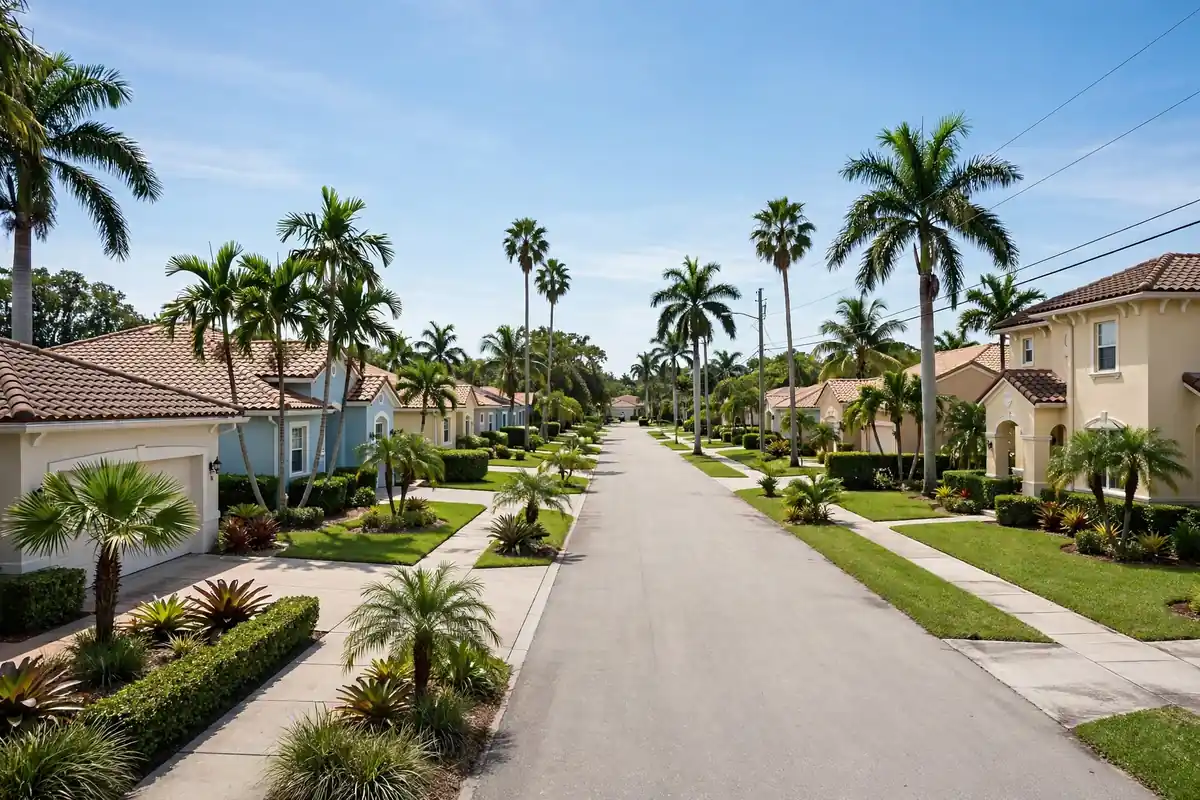
In short: North Boca Raton (33487) is a 1980s condo and townhome belt — Boca Teeca, San Remo, Sunflower — with a retiree-weighted median age of 53.1, so Sewer Line Repair Crew answers mostly to association boards. Mid-rise stacks may carry 40-year-old cast iron; scrub roots press on shallow laterals. Call (833) 713-2101.
Area Facts
- Area
- Boca Raton, FL
- ZIP
- 33487
- Housing
- 1980s condos/townhomes (Boca Teeca, San Remo, Sunflower), pockets toward Spanish River
- Pipe stock
- PVC transition era; mid-rise condo stacks may carry ~40-year cast iron
- Water table
- 2–5 ft; saltwater fringe near Spanish River Park
- Landmarks
- Boca Teeca, Spanish River Park, Gumbo Limbo Nature Center, Yamato Scrub, Boca Tri-Rail
ZIP 33487 is north Boca Raton, and its profile is younger than its 33486 sibling: the dominant stock is the 1980s condo and townhome belt — Boca Teeca's 1986 condos off Yamato Road east of I-95, San Remo Golf & Tennis, the 1983 Sunflower Townhomes on NW 2nd Avenue, Hidden Valley along North Federal Highway — plus older single-family pockets toward Spanish River. The median age here is 53.1, retiree-weighted, which matters for sewer work because decisions run through association boards and property managers rather than single homeowners: the buyer is a committee that needs footage it can defend at the next meeting. The pipe stock of the 1980s is the PVC transition era, so most townhome laterals are sound — PVC does not corrode, and 1980s joints fail to roots and bellies, not to internal decay. But the mid-rise condo stacks in this ZIP may still carry original cast iron now roughly 40 years old, entering the window where scale chokes the bore and joints start to open, and that is where the age-driven failures concentrate: lower-floor backups, stack leaks staining walls in the units below.
The geography adds two wrinkles that 33486 does not share. First, the Yamato Scrub and Pondhawk Natural Areas press scrub-sand soils with sand-pine and scrub-oak systems right against the built edge, and those shallow, aggressive root systems hunt the moisture in lateral joints year-round — a different intruder than the live oaks and ficus of the older neighborhoods, feeding closer to the surface and reaching laterals faster. Second, the beach-access strip near Spanish River Park and Gumbo Limbo Nature Center exposes laterals to saltwater groundwater: real corrosion pressure on any remaining cast iron, but without the full Intracoastal tidal cycling that pounds 33486's east side — a fringe exposure that accelerates aging without the dramatic tide-tracked backup pattern. Sewer Line Repair Crew treats 33487 as an inspection-led association market: camera surveys that document stack condition and lateral joints, written as board-ready documents with defect locations, material transitions, and recommended reline segments, because boards approve documented programs — not estimates, not verbal assurances.
How Sewer Work Changes in Boca Raton
The buyer is the difference here, and it reshapes the entire job. In 33487 the typical call starts when a condo board or manager reports recurring backups, a wet ceiling on a lower floor, or a reserve study that flagged aging stacks — and the sale is not to a homeowner but to a committee spending the community's money. That changes the deliverable at every step: Sewer Line Repair Crew's camera surveys here are written as board packets, with footage, measurements, defect locations, and a scoped recommendation the board can present and vote on. Trenchless stack and lateral relining fits board budgets and common-area realities — there is limited staging room in a condo community, relining through existing access points keeps amenities open and residents in place, and the work phases floor by floor around the community's schedule. The crew has learned that the fastest way to lose a 33487 job is to show up with a quote and no survey; the fastest way to win it is to show up with footage the board can forward to every owner.
Root pressure from the scrub preserves is the second local factor, and it behaves differently than the canopy roots elsewhere. Sand-pine and scrub-oak roots are shallow feeders, and in the scrub-sand soils along the preserve edges they reach laterals fast — the pattern here is not the old-clay collapse of 33486's Mizner districts but root intrusion at PVC-era joints and at the cast-iron segments that remain, often announced by slow drains that return a few months after a cleaning. Cutting without documentation fails here on the usual schedule: the roots regrow into the same open joint, because the preserve keeps feeding them. The durable answer is camera-verified cutting to confirm each joint, then trenchless relining for the joints that keep re-intruding — a sealed liner the shallow roots cannot penetrate. And on the beach-access fringe near Spanish River Park, the saltwater groundwater adds its corrosion accelerator to any cast iron still in service, which is why the crew reads the 33487 camera for both intrusion and corrosion pattern: two failure modes, one survey, one board-ready report.
Services Available in Boca Raton
In 33487 the services that matter most are camera inspections written for association boards — footage, measurements, and scoped reline recommendations in a votable packet — trenchless relining of mid-rise cast-iron stacks and laterals phased floor by floor through existing access points, and root-intrusion cutting with documented before-and-after footage for properties backing the Yamato Scrub and Pondhawk preserves. Hydro-jetting maintenance fits the PVC townhome laterals that do not need replacement, keeping 1980s pipe at full bore on a schedule. Where saltwater groundwater reaches cast iron near Spanish River Park, relining doubles as corrosion protection: a sealed liner stops both infiltration and the salt cycling that eats the pipe from the inside. Open-cut replacement is reserved for collapsed sections and is quoted with the 2–5 ft water table and the community's limited staging in the plan. Boards typically pair the stack survey with the lateral program in a single capital plan — one approval, one mobilization, both failure modes covered.
Sewer Services in Boca Raton
Commercial Sewer Services
Boca Raton, FL 33487
Learn moreEmergency Sewer Repair
Boca Raton, FL 33487
Learn morePipe Bursting
Boca Raton, FL 33487
Learn morePipe Lining
Boca Raton, FL 33487
Learn moreSewer Camera Inspection
Boca Raton, FL 33487
Learn moreSewer Leak Detection
Boca Raton, FL 33487
Learn moreSewer Line Cleaning
Boca Raton, FL 33487
Learn moreSewer Line Installation
Boca Raton, FL 33487
Learn moreSewer Line Replacement
Boca Raton, FL 33487
Learn moreSewer Maintenance
Boca Raton, FL 33487
Learn moreTree Root Removal
Boca Raton, FL 33487
Learn moreTrenchless Sewer Repair
Boca Raton, FL 33487
Learn moreFrequently Asked Questions
Our condo board in Boca Teeca keeps getting backups on the ground floor. What should we ask for?
A camera survey of the vertical stack and the building lateral, delivered as a written board-ready report with footage, measurements, and defect locations. Ground-floor backups in a 1980s mid-rise usually trace to scale-choked cast-iron stacks or root intrusion at the lateral, and a board cannot vote a reline program without documentation — it is spending the community's money. The survey gives the board the footage to present at the next meeting and the scoped recommendation to vote on. Call (833) 713-2101; the survey is built for exactly this presentation.
We back the Yamato Scrub. How do preserve roots affect our sewer?
Sand-pine and scrub-oak roots are aggressive shallow feeders that find moisture at lateral joints in the scrub-sand soils along the preserve edge — faster than the live-oak roots of older neighborhoods, because they feed closer to the surface. The sign is slow drains that return a few months after cleaning. The answer is camera-verified root cutting on a maintenance schedule to confirm each joint, plus trenchless relining for any joint that keeps re-intruding, so the roots stop getting in permanently. The preserve is not going anywhere; the pipe side is where the fix lives.
Is the saltwater near Spanish River Park a real problem for our lines?
It is a corrosion accelerator for any cast iron still in service on the beach-access fringe — less tidal cycling than 33486's Intracoastal side, but real saltwater groundwater contact that pits the pipe and opens joints faster than inland equivalents. PVC laterals are unaffected by the salt; the risk concentrates in remaining cast-iron segments, which is why the camera survey maps exactly where cast iron remains. Where it does, relining doubles as corrosion protection: the sealed liner stops both infiltration and the salt cycling.
Why does our association need a written report instead of just a quote?
Boards vote with other people's money, so they need documented findings: footage, measurements, defect locations, and a scoped recommendation they can defend to every owner. A quote without a survey is a guess the board cannot defend at the next meeting — and no responsible board approves a capital project on a guess. The report Sewer Line Repair Crew produces is designed for exactly that presentation: the footage first, the numbers second, the recommendation last.
Our townhome lateral is 1980s PVC. Do we ever need to replace it?
Rarely. PVC-era laterals fail at joints to root intrusion or belly in sandy backfill — both repairable or maintainable without full replacement. What 1980s stock needs is inspection on a schedule and root cutting when the camera shows intrusion, not a new line. Replacement enters the conversation only for a collapsed or severely bellied section, and the camera — not the calendar — makes that call. Most 1980s laterals the crew sees are maintained, not replaced.
How disruptive is stack relining for residents?
Far less than opening walls. Trenchless stack relining works through existing access points — roof vents and cleanouts — so there is no demolition in units, amenities stay open, and the work phases floor by floor around the community's schedule. Water service interruptions are scheduled per phase and announced in advance. The board gets a per-phase scope and residents get advance notice, not surprises — which is why boards approve trenchless programs far more readily than open-cut proposals.
Don't Let a Sewer Problem Sit
Get connected with a trusted local specialist serving Coconut Creek and nearby areas — call anytime.
(833) 713-2101Speak with a local pro · No pressure
Serving Boca Raton, FL 33487