
In short: Oakland Park (33309) is the county's textbook infiltration case — documented by the city itself. The C-1 lift station basin report states the majority of the gravity sewer system is vitrified clay pipe installed 60+ years ago with deteriorated, leaking joints, most of it BELOW the water table. The city chose trenchless CIPP lining. Call (833) 713-2101.
Area Facts
- Area
- Oakland Park, FL
- ZIP
- 33309
- Housing
- Working-class 1940s–60s homes (Dixie Hwy corridor, Andrews Ave); 1970s–80s garden condos (Lake Emerald, 1982)
- Pipe stock
- Vitrified clay tile 60+ years (city-documented: leaking joints, cracks, severed segments); clay + cast iron in homes; PVC post-1970s
- Water table
- 2–5 ft; most of the gravity system sits BELOW the water table — groundwater infiltrates INTO pipes
- Landmarks
- Fat Village Arts District, Funky Buddha Brewery, Jaco Pastorius Park, Dixie Highway corridor, Lake Emerald
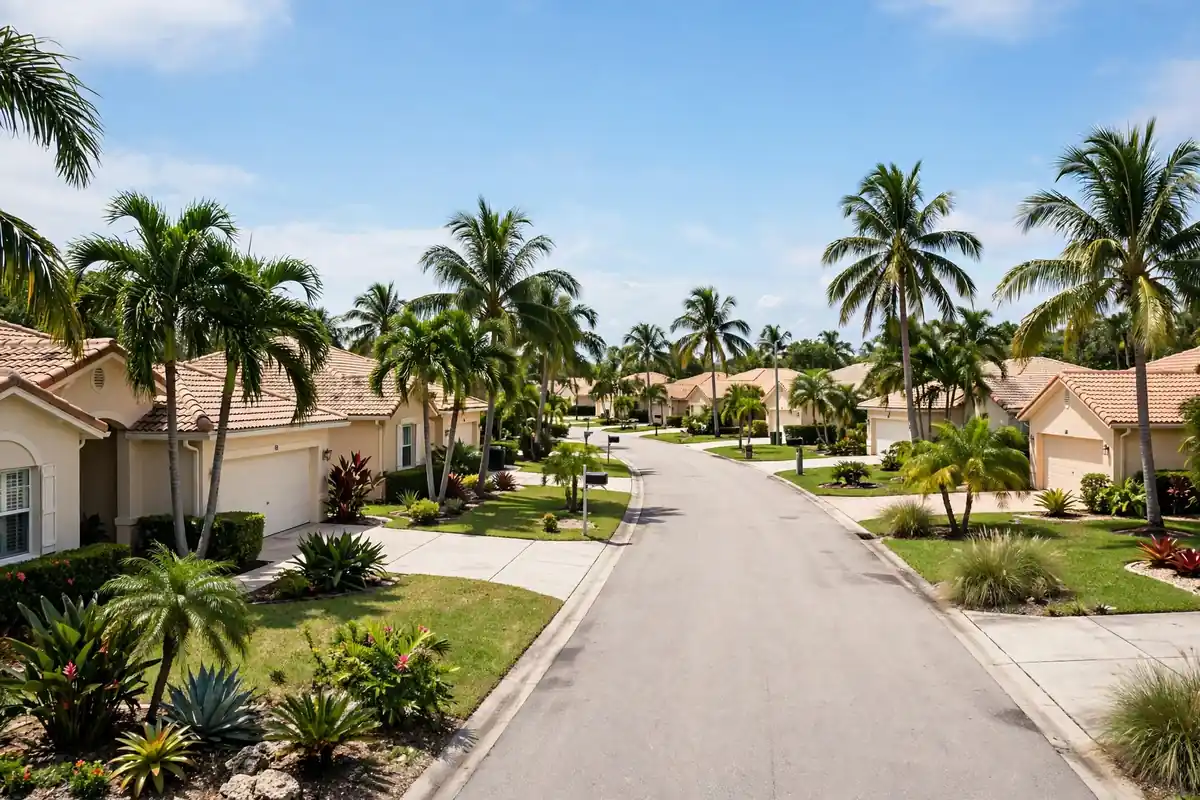
ZIP 33309 is Oakland Park: working-class 1940s–60s single-family homes along the Dixie Highway corridor and Andrews Avenue, 1970s–80s garden condos like Lake Emerald Condominium (built 1982), the Fat Village arts-district warehouses, and the lake communities of Lake Emerald and North Andrews — with Jaco Pastorius Park and the Funky Buddha Brewery marking the cultural side and Oakland Park Boulevard as the commercial spine. The homes carry 1940s–50s clay tile laterals with cast-iron drains and 1960s+ cast iron, PVC from the late 1970s. But the story that matters here is not the homes at all — it is the city's own sewer system, documented in the City of Oakland Park's C-1 lift station basin report: the majority of the gravity system is 60+ year-old vitrified clay with deteriorated, leaking joints, CCTV-confirmed cracks, severed segments, and shattered wyes. No other ZIP in this group has its own city documenting the exact failure its homeowners face, in the city's own engineering record. The Dixie Highway corridor's auto shops and small businesses add commercial loading to the residential clay profile — their lines get jetting on top of the infiltration survey.
The report's decisive detail is the water table, and it inverts the usual leak story. Most of that 60-year-old clay sits BELOW the water table — so groundwater does not leak out of the pipes, it infiltrates INTO them, overloading the lift stations the city is now spending public money to protect with its CIPP lining program for the C-1 basin. Private laterals of the same vintage clay, in the same 2–5 ft water table, suffer the identical joint failure: any camera survey here should be expected to show standing groundwater in the pipes, not just roots — infiltration first, roots second, because the water is the constant and the roots are its consequence. Sewer Line Repair Crew works 33309 with the city's own documentation as the precedent and the sales lever: the city chose trenchless CIPP lining for its clay, the footage shows the same leaking joints on the private side, and the recommendation is the same lining the city's engineers validated. It is not a sales claim; it is the public record applied to the pipe behind the property line. Lake Emerald's lakefront lots sit lower than the corridor — the camera surveys there read the water table at its highest, and the infiltration evidence is strongest.
How Sewer Work Changes in Oakland Park
The public-precedent lever is the local hook, and it shortens every conversation in 33309. When the city's engineers put in writing that 60-year-old clay has leaking joints below the water table — with CCTV-confirmed cracks, severed segments, and shattered wyes — and then spend public money on CIPP lining to fix it, the private-lateral conversation is already half won before the camera goes in. The crew's surveys are framed against that precedent deliberately: the footage shows the same leaking joints, the same standing groundwater, the same joint failure the city documented, side by side with the public record. The homeowner is not being asked to trust a contractor's opinion about 60-year-old clay; the homeowner is being shown the city's opinion about 60-year-old clay, plus footage of their own lateral doing the same thing. That is a different sale — precedent plus proof — and it is unique to this ZIP. Homeowners sometimes bring the city's C-1 report to the appointment — the crew walks them through how the public findings map onto their private lateral, section by section.
The second factor is what the camera actually shows in 33309, because below-the-water-table clay presents differently than any other pipe in the group. It presents as infiltration first: standing groundwater visible in the pipe, joints weeping, the line carrying water it was never sized for — roots follow, exploiting the same open joints, but the infiltration is the primary failure and the camera has to be read for it. That changes both the inspection and the recommendation: the survey documents water entry points, not just blockages, and the scope prioritizes sealing — CIPP liners that close every joint against the water table — over cutting. Roots get cut where they have intruded, but cutting without sealing is mopping without fixing the leak. And any open-cut work below this water table demands dewatering pumps as a matter of course — quoted into every 33309 excavation up front, because the city's own report makes the water table a known condition, never a mid-dig surprise.
Services Available in Oakland Park
In Oakland Park 33309 the services that matter most are infiltration-first camera inspections — surveys that document water entry the way the city's own CCTV documented the mains — trenchless CIPP relining for the 60-year-old clay tile laterals, the same method the city chose for the C-1 basin, and root-intrusion cutting for the joints where roots have followed the infiltration in. Dewatering is built into every open-cut quote as standard, because the whole system sits below the water table; there is no 33309 excavation without pumps. For the 1970s–80s garden condos on PVC-transition stock, the service is camera inspections and maintenance — a different pipe, a different profile. The crew scopes every 33309 job against the city's documented precedent, so the homeowner sees the public record and the private footage side by side, and the recommendation carries the weight of both. The crew archives every 33309 survey with the C-1 basin reference noted — so the footage and the public record travel together if the homeowner ever needs both.
Sewer Services in Oakland Park
Commercial Sewer Services
Oakland Park, FL 33309
Learn moreEmergency Sewer Repair
Oakland Park, FL 33309
Learn morePipe Bursting
Oakland Park, FL 33309
Learn morePipe Lining
Oakland Park, FL 33309
Learn moreSewer Camera Inspection
Oakland Park, FL 33309
Learn moreSewer Leak Detection
Oakland Park, FL 33309
Learn moreSewer Line Cleaning
Oakland Park, FL 33309
Learn moreSewer Line Installation
Oakland Park, FL 33309
Learn moreSewer Line Replacement
Oakland Park, FL 33309
Learn moreSewer Maintenance
Oakland Park, FL 33309
Learn moreTree Root Removal
Oakland Park, FL 33309
Learn moreTrenchless Sewer Repair
Oakland Park, FL 33309
Learn moreFrequently Asked Questions
The city says its sewers are 60-year-old clay with leaking joints. Does that affect my home's lateral?
Directly — same vintage, same ground, same failure. Your lateral is the same 60+ year-old clay in the same 2–5 ft water table, suffering the identical joint failure the city's C-1 basin report documents: deteriorated, leaking joints with groundwater infiltrating INTO the pipe. The city's CCTV found cracks, severed segments, and shattered wyes in the mains; the camera finds the same joint failure in laterals. And the city chose trenchless CIPP lining for its fix — the precedent for yours, validated by the city's own engineers. Call (833) 713-2101 for the survey that shows your lateral against that record.
What will the camera show in my pipes?
Expect standing groundwater, not just roots — that is the below-the-water-table signature. The footage shows water visibly entering through open joints, the line carrying groundwater it was never sized for, with roots exploiting the same joints second. The survey documents water entry points the way the city's own CCTV documented the mains: infiltration first, roots second. If your camera shows a dry line with root intrusion only, your lateral is beating the odds — but the survey is still the proof, not the assumption.
Why is trenchless lining the recommendation instead of replacement?
For the same reason the city chose it for the C-1 basin: it seals every leaking joint against the water table without open trenches below groundwater — no dewatering operation, no trench through the yard, every joint closed in one project. Where clay has collapsed or severed, open-cut replacement is still the answer and the crew says so; where joints are leaking but the pipe holds shape, lining is the fix the city's own engineers validated with public money. The camera shows which sections are which.
My home is 1940s. Is my pipe even older than the city's?
Possibly — and the camera will tell you exactly how much older. 1940s–50s homes carry clay tile laterals with cast-iron drains that predate the 60-year-old mains, putting them at 70+ years: the same joint failure, further along — more offset joints, more infiltration, more root mass. The survey places your lateral on the timeline the city's report established, so the recommendation accounts for where your pipe actually is, not where the mains are.
Do I need dewatering for an open-cut repair here?
Yes — standard, quoted up front, never discovered mid-dig. The whole gravity system sits below the water table, so every 33309 excavation is a dewatering operation with pumps running throughout. The crew builds it into every quote because the city's own report makes the water table a known condition. Any bid that does not mention dewatering in this ZIP was written by someone who has not read the city's report — or your camera footage.
Our condo was built in 1982. Do we have the clay problem?
No — Lake Emerald-era 1980s construction is PVC-transition stock: a different pipe and a different profile, root intrusion and bellies rather than 60-year clay joint failure below the water table. Your buildings need camera inspections and maintenance, not the CIPP program. The camera keeps the two stocks honest — and the board gets footage for its records either way, because documented condition is what boards decide from.
Don't Let a Sewer Problem Sit
Get connected with a trusted local specialist serving Coconut Creek and nearby areas — call anytime.
(833) 713-2101Talk to a specialist now · Free call
Serving Oakland Park, FL 33309