
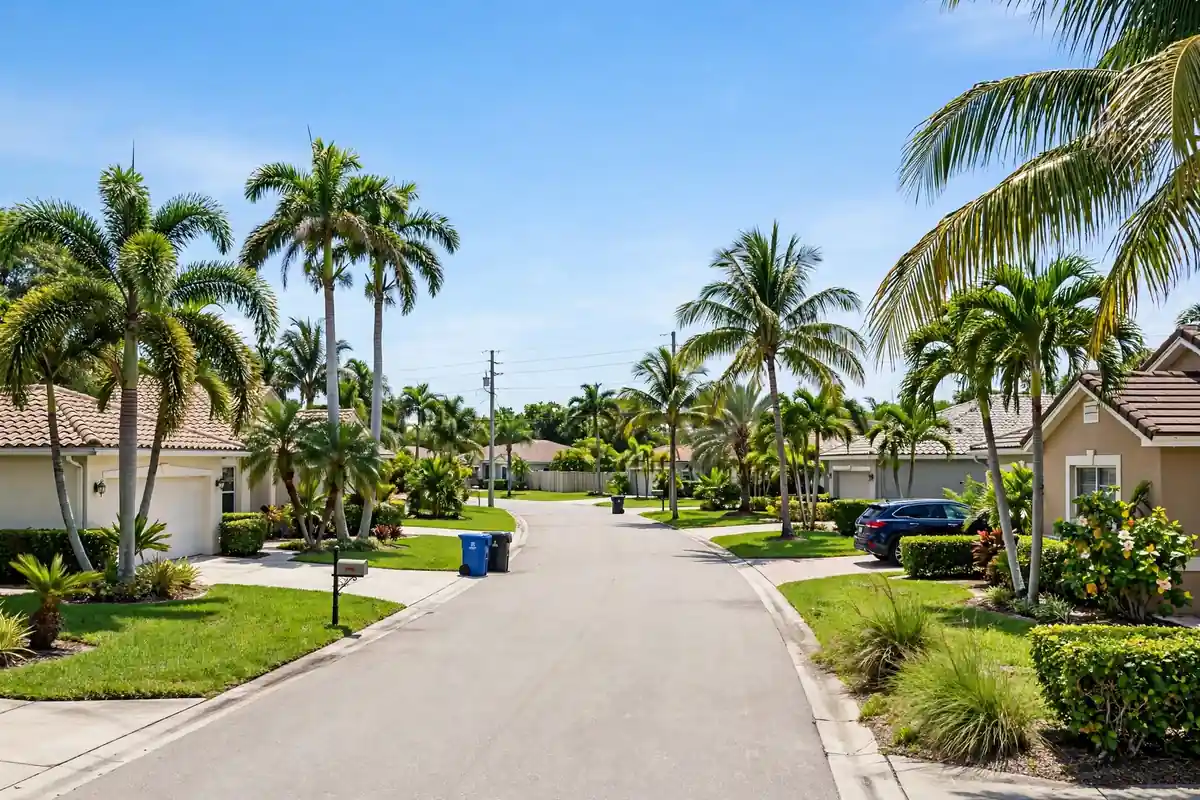
In short: East Deerfield Beach (33441) holds the oldest housing stock in this group: 1950s–60s beach cottages, Hillsboro Mile oceanfront estates, 1960s–80s beachside condo towers along A1A, and The Cove. The differentiator is tidal cycling — beachside laterals sit in groundwater that rises and falls with the tide, so cracked 1950s cast iron breathes saltwater in and out. Call (833) 713-2101.
Area Facts
- Area
- Deerfield Beach, FL
- ZIP
- 33441
- Housing
- 1950s–60s beach cottages (east), Hillsboro Mile oceanfront estates, 1960s–80s beachside condo towers, The Cove
- Pipe stock
- Cast iron + clay tile laterals (1950s–60s); long private estate laterals; condo cast-iron stacks
- Water table
- 1–3 ft near the coast, tidal cycling; king tides Aug–Nov
- Landmarks
- International Fishing Pier, Hillsboro Mile, The Cove, Deer Creek Golf Club, Hillsboro Inlet
ZIP 33441 is the east side of Deerfield Beach — the beachside, The Cove, and the Hillsboro Mile — and its housing stock is the oldest in this group. The 1950s and 1960s beach cottages and bungalows east of the Intracoastal carry the earliest pipe in the batch: cast-iron drains with clay tile laterals, some of it 70 years old, laid when the beachside was cottages and the towers were still drawings. The Hillsboro Mile's luxury oceanfront estates run long private laterals — 100 feet or more — beneath seawalls, driveways, and landscaping to reach the street main, each one a private system the owner alone maintains. The 1960s–80s beachside condo towers along A1A and The Cove's shopping-and-condo district add vertical cast-iron stacks of the same vintage to the picture, and Deer Creek's golf community sits just inland of the tidal zone. The International Fishing Pier marks the beach the whole ZIP is built around, with the Hillsboro Inlet at the southern tip. Sullivan Park's waterfront sits at the tidal edge where the beachside laterals begin — the park's own drainage shows the same king-tide flooding the camera surveys are timed around.
The ground here does something no inland ZIP's ground does: it breathes with the tide. Beachside laterals in 33441 sit in a water table at 1–3 ft that rises and falls with tidal cycles, surging during the August-to-November king-tide season — and cracked 1950s cast iron in that envelope does not just sit in water, it breathes saltwater in and out with every cycle. The dissolved salts attack both cast iron and the mortar in old clay tile joints, corroding joints faster than any inland equivalent and driving infiltration that spikes at high tide: backups and slow drains that track the tide tables, worse in September and October, calmer in the spring. Sewer Line Repair Crew scopes 33441 as a tidal-corrosion market: camera surveys timed to catch the active infiltration window, trenchless methods as the default where digging would destroy seawalls and landscaping, and salinity-aware inspection framing that treats saltwater as the corrosion accelerator it is — because here, infiltration and corrosion are the same problem wearing two faces. The Cove's restaurant row adds a commercial note to the beachside profile: kitchen lines that need jetting on top of the tidal-corrosion survey the buildings need.
How Sewer Work Changes in Deerfield Beach
Tidal cycling is the differentiator, and it changes the diagnosis in a way inland experience does not prepare a homeowner for. Inland, a cracked joint weeps groundwater at a steady rate; in 33441, the same cracked joint inhales saltwater at high tide and exhales it at low tide, and each cycle deposits salts that keep corroding after the water drops. The failure signature is backups and slow drains that track the tide tables and the king-tide season — and the diagnostic consequence is that timing matters: a camera inspection run at high tide shows infiltration points streaming that a low-tide inspection misses entirely. The crew times 33441 surveys for the tidal window on purpose, ideally in the August-to-November king-tide season, because a dry-season camera can clear a line that is actually failing. Homeowners who have been told 'the line looks fine' after a low-tide inspection are the classic 33441 second-opinion call — and the high-tide re-survey usually tells a different story. Estate owners often schedule the high-tide survey to coincide with the fall king tides — the September and October windows when the infiltration evidence is strongest and the reline scope is clearest.
The second factor is the Hillsboro Mile estates' geometry, which makes trenchless not a preference but a constraint. A 100+ ft private lateral running under a seawall, a motor court, and mature landscaping cannot be open-cut without ruinous restoration costs: trenching severs the only access, destroys the plantings, and risks the seawall itself — the structure holding back the ocean the estate is named for. Trenchless CIPP relining and pipe bursting are effectively mandatory on these lots: the liner goes in through cleanouts or small pits, the seawall never moves, the motor court never opens, and the landscaping survives. For the beachside condo towers, the same logic applies vertically — 1960s–80s cast-iron stacks at end-of-life, relined through roof vents without opening walls or entering units. Open-cut in 33441 is reserved for collapsed sections, and even then it is quoted with tidal dewatering — pumps running against a water table that rises twice a day — and a restoration plan for whatever the trench crosses.
Services Available in Deerfield Beach
In 33441 the services that matter most are tidal-window camera inspections — scheduled for high tide and ideally the king-tide season — that catch infiltration at its worst, trenchless CIPP relining and pipe bursting for the long Hillsboro Mile estate laterals and the beachside condo stacks, and root-intrusion cutting where the mature canopy meets the old clay and cast-iron joints of the cottage neighborhoods. Salinity-aware inspection framing documents the corrosion pattern estate owners and boards need to see: pitting, joint loss, and infiltration mapped together. Where 1950s clay tile has collapsed, open-cut replacement is quoted with tidal dewatering and full restoration planning — because in this ZIP the ground fights back twice a day, and the quote has to say so. For The Cove's mixed-use buildings, the crew bundles the tidal-corrosion lateral survey with commercial kitchen-line jetting — one mobilization, two scopes, scheduled around business hours.
Sewer Services in Deerfield Beach
Commercial Sewer Services
Deerfield Beach, FL 33441
Learn moreEmergency Sewer Repair
Deerfield Beach, FL 33441
Learn morePipe Bursting
Deerfield Beach, FL 33441
Learn morePipe Lining
Deerfield Beach, FL 33441
Learn moreSewer Camera Inspection
Deerfield Beach, FL 33441
Learn moreSewer Leak Detection
Deerfield Beach, FL 33441
Learn moreSewer Line Cleaning
Deerfield Beach, FL 33441
Learn moreSewer Line Installation
Deerfield Beach, FL 33441
Learn moreSewer Line Replacement
Deerfield Beach, FL 33441
Learn moreSewer Maintenance
Deerfield Beach, FL 33441
Learn moreTree Root Removal
Deerfield Beach, FL 33441
Learn moreTrenchless Sewer Repair
Deerfield Beach, FL 33441
Learn moreFrequently Asked Questions
My drains back up at high tide but clear at low tide. What is happening?
Your lateral is breathing with the tide — the classic 33441 signature. Cracked 1950s cast iron or clay tile in the 1–3 ft tidal water table inhales saltwater at high tide, infiltrating through the joints and surcharging the line, then drains back down at low tide. It is not a clog; it is tidal infiltration, and no amount of drain cleaning fixes a tide. A camera inspection run at high tide shows the infiltration points streaming — the evidence that decides the fix, which is sealing the joints with a trenchless liner or replacing the failed section.
Why does saltwater matter more than regular groundwater?
Saltwater is a corrosion accelerator with a memory: the tidal cycling carries dissolved salts into cracked joints, where they attack cast iron from the inside and eat the mortar out of old clay tile joints — and the salts keep corroding after the tide drops. Inland groundwater wets a crack; saltwater cycling actively enlarges it with every tide. That is why beachside 1950s pipe corrodes faster than the same pipe a mile inland, and why the 33441 camera is read for corrosion pattern — pitting, joint loss — not just blockage.
Our Hillsboro Mile estate has a 120-foot lateral under the landscaping. Can it be fixed without digging up the yard?
Yes — trenchless is the standard for exactly this geometry. CIPP relining or pipe bursting renews the lateral through cleanouts or small access pits: the seawall never moves, the motor court never opens, and the mature plantings survive. Open-cut on a lot like this is ruinous by comparison — trenching severs the only access and risks the seawall — which is why the crew scopes trenchless first and documents the camera findings for the estate's records. Call (833) 713-2101 for the survey.
Our beachside condo tower keeps having multi-floor backups. Is that the lateral?
Usually the stacks, not the lateral. The 1960s–80s beachside towers run vertical cast-iron stacks at end-of-life, and saltwater groundwater accelerates their internal corrosion beyond the inland rate — scale chokes the bore, joints fail, and the backups hit multiple floors at once. The fix is a stack camera survey from the roof vent, then trenchless relining floor by floor through existing access: no wall demolition, no unit entry, phased around residents. The building lateral gets its own survey, because towers can have both failure modes.
When should a 33441 sewer line get its tidal-window inspection?
During the tidal window — at or near high tide, and ideally in the August-to-November king-tide season, when infiltration is at its worst and the camera sees everything. A dry-season or low-tide inspection can miss infiltration points that stream in September, which is why 'the line looks fine' from a low-tide survey is the classic 33441 misdiagnosis. Call (833) 713-2101 and the crew schedules the survey for the tide, not just the calendar.
The Cove area has shops and condos mixed together. Does that change the work?
The pipe does not care about the zoning — 1960s–80s cast iron is 1960s–80s cast iron, and tidal corrosion treats a shop lateral like a condo lateral. But the logistics do change: mixed-use blocks mean coordinating with businesses for access and scheduling work around operating hours, and trenchless methods keep the disruption to a cleanout access point rather than a torn-up parking lot. The crew handles the business coordination as part of the scope.
Your Local Sewer Line Connection
Reach a Coconut Creek, FL sewer professional in one call — emergency service around the clock.
(833) 713-2101Speak with a local pro · No pressure
Serving Deerfield Beach, FL 33441