
In short: North Lauderdale (33068) is a compact 4.7-square-mile city of 44,794 — incorporated July 10, 1963 — built on 1960s–70s garden apartments, condo villages, and modest ranches, with rental-heavy corridors along State Road 7 and Southgate Boulevard. The differentiator is the rental and landlord market: absentee-owner decision chains slow emergency work, so the inspection report becomes the sales tool. Call (833) 713-2101.
Area Facts
- Area
- North Lauderdale, FL
- ZIP
- 33068
- Housing
- 1960s–70s garden apartments, condo villages, modest ranches; rental-heavy corridors (State Rd 7, Southgate Blvd); 4.7 sq mi, pop. 44,794
- Pipe stock
- Cast iron (1960s–70s); rental conversions often patched/partially replaced
- Water table
- 2–5 ft; C-14 canal northern border; canal seepage saturates adjacent soils
- Landmarks
- Hampton Pines Park, North Lauderdale City Hall, Southgate Blvd, State Road 7 corridor, C-14 canal border
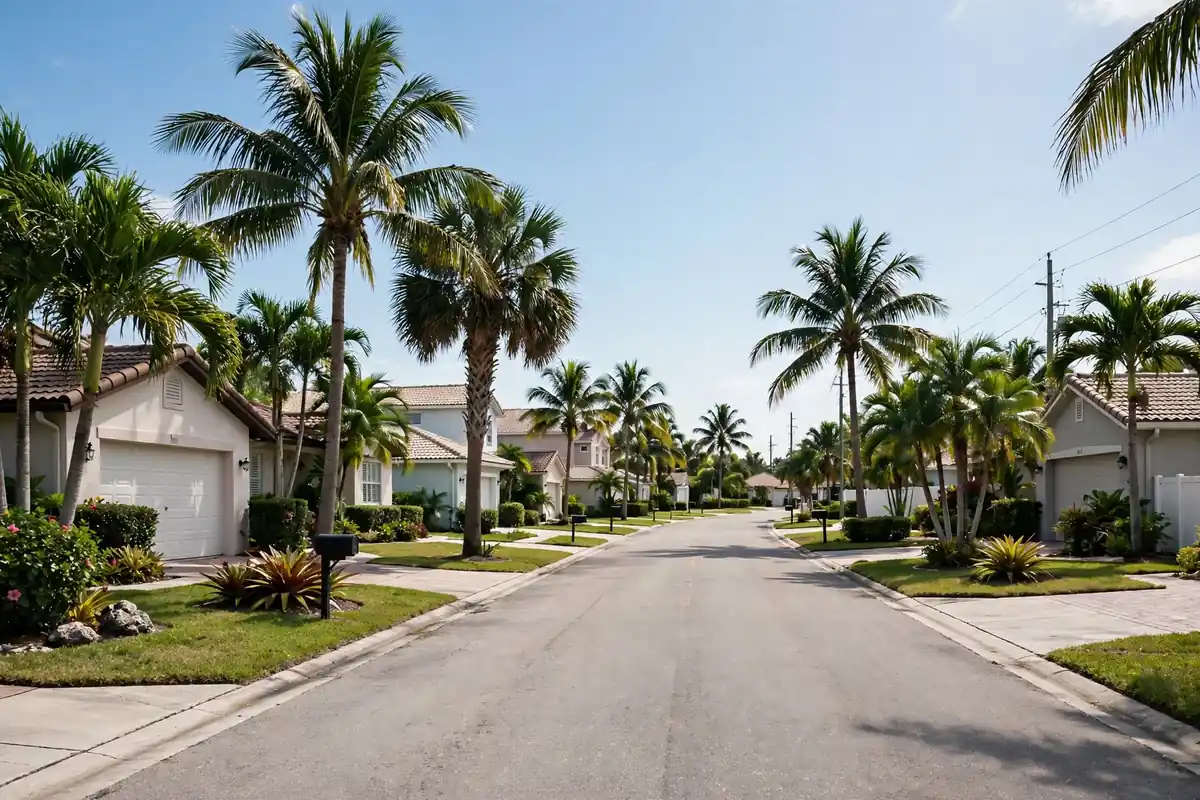
North Lauderdale is a compact city — 4.7 square miles, 44,794 residents in 2020, incorporated July 10, 1963 — and ZIP 33068 covers its 1960s–70s garden apartments and condo villages, its modest single-family ranches, and the rental-heavy corridors along State Road 7 and Southgate Boulevard, with Hampton Pines Park and City Hall marking the civic core and the North Lauderdale Shopping Center serving the corridors. The pipe stock is the 1960s–70s cast-iron era — 50+ years old, past the age where joints hold — with a rental-market wrinkle the owner-occupied ZIPs do not have: conversions and investor-owned buildings often carry patched or partially replaced systems, so per-property condition varies more here than anywhere in the group. One building's lateral can be original 1968 cast iron while the identical building next door got a partial PVC swap in 2005. Slab-on-grade throughout, and the C-14 canal forming the northern border sets the water story: canal seepage keeping the border soils saturated year-round. The North Lauderdale Shopping Center's outparcels add small-commercial grease and volume loading to the residential corridors — surveyed on the business schedule, not the residential one.
The rental market is the sewer story, and it changes the product, not just the pitch. Absentee owners and property managers decide on repairs through email chains and approval thresholds, which slows emergency work — a backup that an owner-occupant would approve on the spot can take a manager three days and two authorizations, during which the backup worsens or the tenant escalates. That delay changes what the crew sells: in 33068, the inspection report is the sales tool. Camera footage with written plain-language findings gives the manager something to forward to the owner — documented proof that the line needs cutting, relining, or replacement, with defect locations, the cost of waiting, and the tenant-impact timeline spelled out. Sewer Line Repair Crew writes 33068 reports for forwarding: clear footage, findings a non-technical owner can understand, and a recommendation an owner three states away can approve from a phone screen. The faster the report persuades, the faster the work starts — and in a rental corridor, speed is tenant retention.
How Sewer Work Changes in North Lauderdale
The landlord decision chain is the local hook, and the crew's whole 33068 process is built to compress it. In the State Road 7 and Southgate Boulevard corridors, the person with the backup is rarely the person with the checkbook: tenants report, managers triage, owners approve — and every extra day of that chain is a day the problem compounds. So the job is structured as same-day camera survey, footage and written findings delivered in a forwardable report, and a scoped recommendation with the failure documented and the options priced against the cost of delay. The report does the persuading the manager cannot do over the phone: the owner sees the cracked joints, the infiltration, the root mass — and approves. And for the chronic slow-drain complaints that fill these corridors — misdiagnosed for years as simple clogs, snaked again and again — the camera usually finds the real cause: infiltration at cracked 1960s clay and cast-iron joints, fed by the canal-border seepage, presenting as 'just a clog' until the footage proves otherwise. The forwardable report ends both the delay and the misdiagnosis in one document. Property managers on the corridors typically need the report within 24 hours of the survey — the crew's turnaround is built for the approval-chain clock, not the other way around.
The second factor is the canal-border infiltration profile — the most aggressive in the group by the card's own assessment, and the reason the camera reads infiltration as the default finding here. The C-14 canal's northern border keeps adjacent soils saturated year-round — not seasonally, constantly — and that saturated sandy soil presses groundwater into every cracked 1960s joint without relief. Infiltration here is not a storm event; it is the standing condition, which means canal-adjacent laterals live perpetually wet, roots never lack for moisture, and joints that would weep occasionally inland weep constantly here. Density adds the third complication: shared laterals and easement access issues recur across the garden-apartment and condo-village blocks, where one lateral serves multiple units and the repair needs access through someone else's patio or parking space. The crew maps the shared-lateral and easement picture in every multi-unit survey — which units are served, where the easements run, whose approval each segment needs — because in 33068 the access question is as important as the pipe question, and the report has to answer both before the owner will sign.
Services Available in North Lauderdale
In North Lauderdale 33068 the services that matter most are camera inspections with forwardable written reports built for property managers and absentee owners — footage, plain-language findings, and recommendations an owner can approve remotely — root-intrusion cutting and trenchless CIPP relining for the canal-border infiltration joints, and chronic slow-drain diagnosis that separates infiltration from simple clogs with the footage to prove it. Shared-lateral and easement access mapping is part of every multi-unit survey, so the approval goes to the right party the first time. Emergency backup response is triaged for the rental corridors, with the documentation managers need to get owner approval fast. Open-cut replacement is quoted with the canal seepage and 2–5 ft water table in the dewatering plan, and with easement access coordinated before the trench opens — never discovered mid-project. The crew offers corridor managers a standing inspection calendar across their buildings — one schedule, every property, footage archived per address.
Sewer Services in North Lauderdale
Commercial Sewer Services
North Lauderdale, FL 33068
Learn moreEmergency Sewer Repair
North Lauderdale, FL 33068
Learn morePipe Bursting
North Lauderdale, FL 33068
Learn morePipe Lining
North Lauderdale, FL 33068
Learn moreSewer Camera Inspection
North Lauderdale, FL 33068
Learn moreSewer Leak Detection
North Lauderdale, FL 33068
Learn moreSewer Line Cleaning
North Lauderdale, FL 33068
Learn moreSewer Line Installation
North Lauderdale, FL 33068
Learn moreSewer Line Replacement
North Lauderdale, FL 33068
Learn moreSewer Maintenance
North Lauderdale, FL 33068
Learn moreTree Root Removal
North Lauderdale, FL 33068
Learn moreTrenchless Sewer Repair
North Lauderdale, FL 33068
Learn moreFrequently Asked Questions
I manage rentals on State Road 7 and the owner is out of state. How do we get a sewer repair approved?
With documentation the owner can approve remotely — that is the entire 33068 product. The crew runs the camera survey, produces footage with written plain-language findings and a scoped recommendation, and you forward the report: the owner sees the cracked joints, the infiltration, the cost of waiting, and the tenant-impact timeline, and approves from a phone screen. No report, no approval; with the report, the approval that took three days takes one email. Call (833) 713-2101 to schedule the survey.
Our building has chronic slow drains that keep getting snaked. Is it really just clogs?
Probably not — that is the classic 33068 misdiagnosis, and the snaking invoices are the evidence. Canal-border seepage keeps soils saturated year-round and presses groundwater into cracked 1960s clay and cast-iron joints, which presents as perpetual slow drains: the line is not clogged, it is infiltrated. Snaking clears the symptom for weeks; the camera finds the infiltration, and the fix is cutting plus relining the open joints — documented on footage the owner can see, so the 'just snake it again' cycle ends with proof.
Who approves work on a shared lateral between units?
The survey maps it first, because guessing wrong sends the approval to the wrong desk. The crew documents which units the lateral serves, where the easements run, and whose responsibility each segment is — unit, association, or owner — across the garden-apartment and condo-village blocks where shared laterals are the norm. The approval then goes to the right party the first time, with access through affected units coordinated in the scope. Shared infrastructure needs mapped responsibility before it needs a contractor.
Why is infiltration worse near the canal?
Because the C-14 canal's seepage keeps the border soils saturated year-round — constantly, not seasonally. Saturated sandy soil presses groundwater into every open joint without relief, so canal-adjacent laterals live perpetually wet: joints that would weep occasionally inland weep constantly here, and roots never lack for moisture. It is the most aggressive infiltration profile in this group, which is why the camera surveys here read infiltration as the default finding and the recommendation prioritizes sealing — relining the open joints — over cutting alone.
Our condo village has 1970s cast iron. Should we plan a reline program?
If the camera shows 50-year-old cast iron with open joints and infiltration — likely near the canal, where the seepage accelerates everything — then yes, and the board needs the same documentation a single owner needs: footage, defect locations, phased scope, the cost of waiting. The crew writes village surveys as board packets, the same standard as the 55+ markets, because the buyer is a committee even when the buildings are not 55+. The canal does not care about the residents' ages; the pipe fails the same way.
How fast can you respond to an active backup in a rental?
Active backups are triaged first: the technician stops the immediate problem, then runs the camera to document the cause — with the forwardable report the manager needs for the owner following the same day. One visit produces both the emergency response and the approval paperwork, which is the only way a rental-corridor backup gets fixed instead of just stopped. Call (833) 713-2101.
Sewer Line Problems Don't Wait. Neither Should You.
Call now and get connected with a local sewer line specialist serving Coconut Creek, FL and nearby communities — 24/7.
(833) 713-2101Talk to a specialist now · Free call
Serving North Lauderdale, FL 33068