
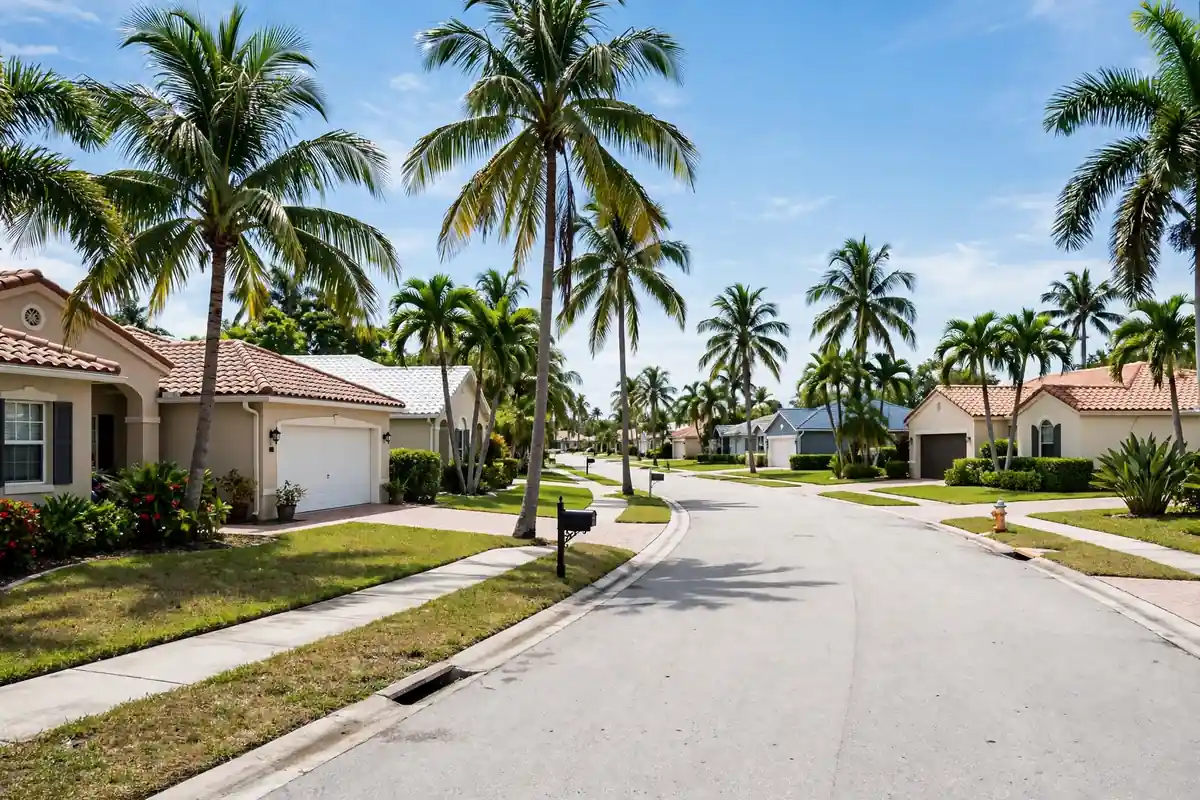
In short: ZIP 33060 splits Pompano Beach in two: the beachside — 1960s–80s condo towers along A1A, the Pompano Beach Pier district — and the historic inland core — 1950s–70s homes in Collier City and old Pompano with the county's oldest working-class clay-tile laterals. The beachside gets the saltwater tidal-corrosion profile; the inland core gets age-driven clay collapse. Call (833) 713-2101.
Area Facts
- Area
- Pompano Beach, FL
- ZIP
- 33060
- Housing
- Beachside 1960s–80s condo towers (A1A); historic core 1950s–70s homes (Collier City, old Pompano); Harbor Village marina
- Pipe stock
- Clay tile + cast iron (1950s–60s core, oldest working-class stock); 1960s–80s condo cast-iron stacks; mixed cast iron/PVC
- Water table
- 1–4 ft tidal near beach, 2–6 ft inland; king-tide flooding on A1A
- Landmarks
- Pompano Beach Pier, Pompano Beach Air Park (Goodyear blimp base), Harbor Village marina, Hillsboro Inlet (north border), Federal Hwy corridor
ZIP 33060 is Pompano Beach's split personality: east of the Intracoastal, the beachside — 1960s–80s condo towers along A1A, the Pompano Beach Pier district, the Harbor Village marina district; west, the historic inland core — 1950s–70s homes in Collier City and old Pompano, the Pompano Beach Air Park with its Goodyear blimp base, the Federal Highway corridor. The Hillsboro Inlet marks the northern border. The pipe stock follows the split exactly: the inland core holds the county's oldest working-class laterals — 1950s–60s clay tile with cast iron, now 60–70 years old — while the beachside towers run 1960s–80s cast-iron stacks at end-of-life, with mixed cast-iron and PVC transitional blocks between them. The water table runs 1–4 ft tidal near the beach and 2–6 ft inland, with king-tide flooding on A1A pressing saltwater into the shallow groundwater every fall. Harbor Village's marina district mixes marine businesses with the residential towers — boat-yard washdown and restaurant grease join the tidal-corrosion profile on the same blocks.
The two halves fail differently, and the crew sells them differently — which is the whole point of the 33060 page. Beachside, it is the saltwater tidal-cycling corrosion profile: cracked cast iron breathing saltwater in and out with the tide, infiltration surging at high tide, corrosion accelerating from the inside out — with a Pompano-specific twist the Fort Lauderdale towers do not share. The tower associations here are older and smaller, with tighter budgets and a history of deferring the stack work the camera keeps recommending, so failures present as chronic multi-unit backups that have been 'managed' with emergency cleanings for years. Inland, it is age-driven and salt-free: 60–70-year clay-tile laterals collapsing and root-intruding in sandy soil, where dewatering is routine on any dig. And near the Air Park, the camera surveys carry one more watch item: industrial-era utility congestion, old lines crossing where the blimp base's infrastructure grew up in layers around them — mapped on the survey before any trench is planned. The Federal Highway corridor's commercial frontage brings the standard commercial drain mix — grease, volume, hours-of-operation scheduling — to the inland half of the ZIP.
How Sewer Work Changes in Pompano Beach
Deferred-maintenance associations are the beachside hook, and they change the sale from a technical pitch to a financial one. The 33060 condo towers are not the Harbor Beach luxury high-rises — they are older, smaller associations with tighter budgets, and their boards have deferred the 1960s–80s stack work through years of emergency cleanings. The failure pattern is chronic by now: multi-unit backups every few months, each one 'handled,' the underlying cast iron getting worse between visits while the saltwater tidal corrosion compresses a timeline the board is underestimating. The crew's pitch here is the documented cost of deferral: the camera survey with footage the board cannot unsee — scale, joint failure, corrosion pattern — the emergency-cleaning spend tallied against the one-time trenchless reline program, and the program phased so the association can budget it across fiscal years. Saltwater does not negotiate with deferral; the footage proves the pipe is on a shorter timeline than the minutes reflect. Deferred-maintenance boards often start with a single-building pilot — one tower's stacks surveyed and relined — and the footage from the pilot sells the remaining buildings.
The second factor is the inland core's age-plus-water combination, the Oakland Park story without the city report. Collier City and old Pompano's 1950s–60s clay tile sits in sandy soil with the water table at 2–6 ft — 1–4 ft tidal near the beach — which means collapses and root intrusions are age-driven, dewatering is routine rather than exceptional, and the camera reads structural age: cracked clay, offset joints, root masses, infiltration at every open joint. Near the Air Park, the added watch item is utility congestion from the industrial era — the blimp base and its surroundings built infrastructure in layers over the decades, and the camera maps crossings before any excavation is scoped, so the trench plan avoids what the survey found. Two halves, two failure modes, one ZIP, one survey that decides which half the property is in — and the recommendation follows the footage, not the address. Collier City's blocks are seeing investor renovations — the crew surveys laterals before the renovation closes walls, when the pipe is still accessible and the findings still change the scope. Pre-renovation surveys are scheduled before demolition — once walls close, the camera loses the interior access that makes the survey straightforward.
Services Available in Pompano Beach
In Pompano Beach 33060 the services that matter most are tidal-window camera inspections for the beachside towers — scheduled for high tide so the camera sees infiltration at its worst — trenchless CIPP stack relining programs documented for deferred-maintenance association boards with the cost of deferral tallied, and open-cut clay-tile replacement with routine dewatering for the historic core's collapsed 1950s–60s laterals. Root-intrusion cutting covers the inland blocks where the canopy meets old clay joints. Utility-congestion mapping on camera surveys is standard near the Air Park before any excavation is scoped. Emergency multi-unit backup response is triaged beachside, with the board documentation that turns the next cleaning into the last one — the footage that moves a deferring board. The crew's beachside program includes an annual high-tide re-survey option for boards — the same tidal window, year over year, so the corrosion trend is documented, not guessed. Sewer Line Repair Crew runs the beachside program on the tidal calendar — surveys timed to the king-tide windows, scopes written from that footage.
Sewer Services in Pompano Beach
Commercial Sewer Services
Pompano Beach, FL 33060
Learn moreEmergency Sewer Repair
Pompano Beach, FL 33060
Learn morePipe Bursting
Pompano Beach, FL 33060
Learn morePipe Lining
Pompano Beach, FL 33060
Learn moreSewer Camera Inspection
Pompano Beach, FL 33060
Learn moreSewer Leak Detection
Pompano Beach, FL 33060
Learn moreSewer Line Cleaning
Pompano Beach, FL 33060
Learn moreSewer Line Installation
Pompano Beach, FL 33060
Learn moreSewer Line Replacement
Pompano Beach, FL 33060
Learn moreSewer Maintenance
Pompano Beach, FL 33060
Learn moreTree Root Removal
Pompano Beach, FL 33060
Learn moreTrenchless Sewer Repair
Pompano Beach, FL 33060
Learn moreFrequently Asked Questions
Our beachside condo board has deferred the stack work for years. What changes the conversation?
Documentation of the cost of deferral — the one thing years of cleanings never produced. The camera survey shows the 1960s–80s cast iron's actual condition: scale, joint failure, saltwater corrosion pattern, all on footage the board cannot unsee. The crew tallies the emergency-cleaning spend against the one-time trenchless reline program, phased so the association can budget it. Saltwater tidal corrosion means the pipe is on a shorter timeline than the board's minutes assume — the footage proves it. Call (833) 713-2101 for the survey that starts the honest conversation.
Our Collier City home was built in 1958. What should we expect underground?
The county's oldest working-class pipe stock: 1950s–60s clay tile laterals with cast iron, now 65+ years old, in sandy soil with a 2–6 ft water table. Expect cracked and offset clay, root intrusion, infiltration at the open joints — the age-driven profile, with no saltwater in the picture this far inland. A camera inspection confirms per-property and sorts the sections: cracked-but-sound clay gets trenchless relining, collapsed sections get open-cut replacement with dewatering. The footage decides; the address does not.
Why do our beachside backups get worse at high tide?
Tidal infiltration — the 33060 beachside signature. Cracked cast iron in the 1–4 ft tidal water table breathes saltwater in at high tide, surcharging the line, then drains back at low tide. It is not a clog cycle; it is a tide cycle, and no amount of drain cleaning fixes a tide. Camera inspections timed for high tide show the infiltration streaming — the evidence the board needs to stop buying cleanings and start buying the reline.
What is the utility congestion concern near the Air Park?
The Goodyear blimp base and its surroundings built infrastructure in layers over the decades — old utility lines crossing where a trench might go, in ground that has been dug and redug. Before any open-cut work near the Air Park, the camera survey maps the crossings so the excavation plan avoids them. It is a standard watch item in the 33060 survey, not an extra charge — and it is the reason the survey comes before the shovel near the base.
We have had multi-unit backups 'managed' with cleanings for two years. When does that end?
When the camera proves the cleanings are managing decline, not fixing anything. Chronic multi-unit backups in a 1960s–80s tower mean the stacks are failing — scale, joints, saltwater corrosion — and each cleaning buys less time than the last while the pipe gets older. The stack survey plus the trenchless reline program ends the cycle; the cleanings just schedule the next emergency. Two years of 'management' is the evidence, not the strategy.
Is dewatering really needed for a dig in the inland core?
Yes — routine, quoted up front, never a mid-dig surprise. The 2–6 ft water table (1–4 ft tidal near the beach) means every excavation here pumps throughout the dig. The crew builds dewatering into every 33060 excavation quote because the water table is a known condition across the whole ZIP. A bid without dewatering in this ZIP was written without reading the ground.
Sewer Line Problems Don't Wait. Neither Should You.
Call now and get connected with a local sewer line specialist serving Coconut Creek, FL and nearby communities — 24/7.
(833) 713-2101Free to call · No obligation · 24/7 emergency line
Serving Pompano Beach, FL 33060