
In short: East and central Boca Raton (33486) pairs 1960s ranches like Royal Oak Hills with 1920s–40s Mizner-era homes, leaving 60-year-old cast iron and older clay tile in a 2–5 ft water table. King tides push saltwater into groundwater each fall, spiking infiltration at cracked joints. Every call starts with a camera inspection and written findings. Call (833) 713-2101.
Area Facts
- Area
- Boca Raton, FL
- ZIP
- 33486
- Housing
- 1960s ranches (Royal Oak Hills), Mizner-era 1920s–40s homes, waterfront estates, 1970s–90s condo towers
- Pipe stock
- Cast iron (pre-1975), clay tile laterals (1920s–40s), PVC (late 1970s+), condo cast-iron stacks
- Water table
- 2–5 ft; tidal push near Intracoastal
- Landmarks
- Mizner Park, Boca Raton Resort, Boca Raton Regional Hospital, Camino Real
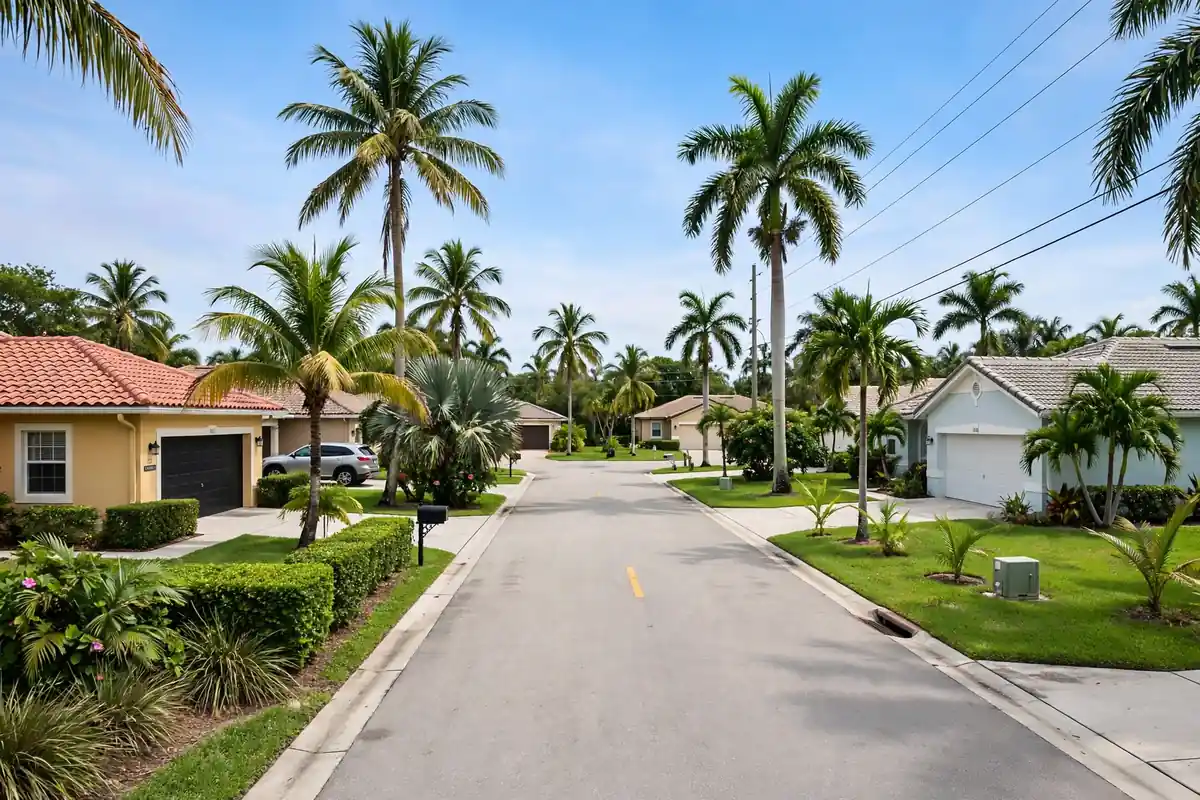
ZIP code 33486 covers the east and central core of Boca Raton, where the housing stock reads like a layered history of South Florida itself. In Royal Oak Hills, 1962–63 single-family ranches sit on slab foundations with cast-iron drain and waste lines that have now crossed the 60-year mark — well into the failure window for cast iron, where scale narrows the bore and joints open to roots and groundwater. A few blocks away, the Old Floresta district holds Addison Mizner's 1920s–40s Spanish and Mediterranean Revival homes — Addison Mizner's 1925 Boca Raton Resort legacy buildings remain the architectural anchor of the city — where era-consistent clay tile laterals predate the cast-iron systems that replaced them, and where mortar joints laid a century ago are now the weakest link in the line. Along the Intracoastal and around the Royal Palm Yacht & Country Club, waterfront estates mix original pipe with rebuilt PVC, each property a patchwork of generations, and the Camino Real corridor threads 1970s–90s condo towers into the same drainage network, their vertical cast-iron stacks of 1960s–80s vintage adding a high-rise failure mode to a low-rise ZIP. Every one of these generations of pipe meets the same ground condition: fine Boca sand with a water table sitting 2 to 5 feet down, draining east through the El Rio and Hillsboro canals toward the Intracoastal, with the coastal flood zones and king-tide street flooding pressing saltwater into the shallow groundwater each fall.
That combination of old pipe and shallow groundwater is exactly why sewer calls in 33486 cluster around the fall. When king tides arrive in September and October, saltwater pushes into the shallow groundwater east of the canals, and cracked cast-iron joints that weep a little in July start taking on water in earnest — the infiltration surcharge shows up as floor drains backing up and fixtures running slow, worse with every tide cycle. Clay tile joints from the Mizner era and 60-year-old cast iron both corrode and crack faster under this cycling, and the dissolved salts attack from the inside out, so a line that looks serviceable on a spring camera can be streaming infiltration by October. Sewer Line Repair Crew answers calls across this ZIP from Camino Real to the Boca Raton Regional Hospital corridor, and the typical visit starts with a camera survey of the lateral from the cleanout to the street main — because in a neighborhood where a 1920s clay lateral and a 1990s PVC lateral can exist on opposite sides of the same block, guessing at the pipe's condition is never a plan. The survey documents pipe material transitions, measured depths, defect locations against the property line, and the infiltration points themselves, so the recommendation — trenchless relining, pipe bursting, or a spot repair — follows the footage instead of preceding it.
How Sewer Work Changes in Boca Raton
Boca Raton's famously stringent zoning and HOA approvals change how sewer work gets done here more than the soil does. Open-cut trenching on an estate near Royal Palm Yacht & Country Club can require architectural review, landscape plans, and sign-offs that stretch a project by weeks — and the lateral itself may run a hundred feet or more beneath mature tropical landscaping that a trench would destroy outright, turning a pipe repair into a landscape reconstruction. That approval landscape is why trenchless methods (CIPP relining and pipe bursting) are the default pitch in 33486: a relined lateral never leaves the ground, the gardens stay intact, the seawall-protected lots are never disturbed, and the permit package is typically simpler because the surface impact is minimal. When Sewer Line Repair Crew scopes a job here, the camera footage doubles as the documentation a board or zoning reviewer expects — measured depths, pipe material transitions, defect locations marked against the property line, and the trenchless scope tied to each defect. The crew has learned to write the survey as an approval document from the first frame, because in 33486 the inspection report is what gets the project permitted, not just what gets it sold.
On the east side of the ZIP, the fall brings the second pressure factor: tidal infiltration, and it has a diagnostic consequence most homeowners miss. Beach-sand soils drain fast, but the water table sits in the same 1–3 ft range as the coastal flood zones, and during king-tide events saltwater groundwater pushes up into the pipe envelope — meaning a cracked joint does not just leak, it breathes saltwater in and out with the tide. The failure signature is backups and slow drains that track the tide tables and worsen every September and October, then ease in the spring when the groundwater drops. A camera inspection timed during that fall window often reveals infiltration points streaming that stay dry — and invisible — in a spring survey, which is why the crew schedules 33486 inspections for the tidal window on purpose: a dry-season camera can clear a line that is actually failing. The practical takeaway for 33486 homeowners is direct — if backups or slow drains repeat every fall, the problem is almost certainly joint infiltration, and the fix is a sealed liner or a replacement section, not another round of drain cleaning. Cleaning a line that is taking on saltwater treats the symptom for weeks; sealing the joints treats the cause for decades.
Services Available in Boca Raton
In 33486 the services that matter most are trenchless sewer relining and pipe bursting for the east-side cast-iron and clay laterals — the default method where HOA and zoning approvals punish open trenches — camera inspections with documented findings written for board and zoning review, and root-intrusion cutting where live oaks and ficus from the 1970s plantings straddle laterals in the ranch neighborhoods. Condo towers along Camino Real need vertical cast-iron stack evaluation: 1960s–80s vintage stacks at end-of-life show scale buildup and joint failures that camera surveys catch before a multi-floor backup, and trenchless stack relining renews them through roof vents without opening walls. Tidal-window scheduling is standard on beachside blocks so the camera sees infiltration at its worst. Open-cut replacement still has a place for collapsed sections, but it is quoted with dewatering for the 2–5 ft water table, landscape-restoration planning for the tropical plantings, and the approval lead time built into the schedule — because in this ZIP the permit path is part of the project.
Sewer Services in Boca Raton
Commercial Sewer Services
Boca Raton, FL 33486
Learn moreEmergency Sewer Repair
Boca Raton, FL 33486
Learn morePipe Bursting
Boca Raton, FL 33486
Learn morePipe Lining
Boca Raton, FL 33486
Learn moreSewer Camera Inspection
Boca Raton, FL 33486
Learn moreSewer Leak Detection
Boca Raton, FL 33486
Learn moreSewer Line Cleaning
Boca Raton, FL 33486
Learn moreSewer Line Installation
Boca Raton, FL 33486
Learn moreSewer Line Replacement
Boca Raton, FL 33486
Learn moreSewer Maintenance
Boca Raton, FL 33486
Learn moreTree Root Removal
Boca Raton, FL 33486
Learn moreTrenchless Sewer Repair
Boca Raton, FL 33486
Learn moreFrequently Asked Questions
Why do my drains back up every fall in 33486 but work fine in spring?
King tides in September and October push saltwater into the shallow groundwater of east Boca. When the groundwater level rises against 60-year-old cast-iron or older clay tile laterals, water infiltrates through cracked joints and overwhelms the line — the pipe itself may be clear, but it is carrying groundwater it was never sized for. The dissolved salts also accelerate corrosion at those joints with every tidal cycle. A camera inspection run during the fall window shows the infiltration points streaming; a spring inspection can miss them entirely because the groundwater has dropped. If your backups track the tide tables and the king-tide season, the fix is sealing the joints with a trenchless liner or replacing the failed section — not another cleaning, which only buys weeks against a tidal problem.
My HOA in a Royal Palm Yacht-area estate won't allow trenching. What are my options?
Trenchless CIPP relining and pipe bursting replace or renew the lateral without an open trench, which is exactly why they are the standard approach in 33486's estate neighborhoods. The work enters through existing cleanouts or small access pits, so mature tropical landscaping stays intact, seawall-protected lots are never disturbed, and the approval package sent to the board or zoning reviewer is documentation of the camera survey plus the trenchless scope — a far simpler permit path than an open-cut proposal with landscape plans. The camera survey comes first and is written as an approval document: measured depths, material transitions, and defect locations the reviewer can verify.
My house in Royal Oak Hills was built in 1962. What pipe do I probably have?
Per-era stock for a 1962 Boca ranch is cast-iron drain and waste pipe, and at 60+ years it is well into the failure window: scale buildup narrows the bore, joints open to roots and groundwater, and the fall king tides turn weeping joints into infiltration points. The only way to confirm per-property is a camera inspection, since repairs and additions over the decades may have swapped sections to PVC — many 33486 lots are a patchwork. The survey maps every material transition so the scope covers the actual pipe, not the assumed pipe.
Do condo towers in 33486 have the same sewer problems as single-family homes?
They share the age but not the failure mode. The 1970s–90s condo towers along Camino Real run vertical cast-iron stacks of 1960s–80s vintage, and those stacks scale and corrode from the inside out — failures show up as multi-floor backups and stack leaks inside walls rather than yard laterals. Saltwater groundwater accelerates the corrosion on the east side. Stack evaluation is a camera job from the roof vent or cleanout, and trenchless relining renews the stacks floor by floor without opening walls or entering units. The lateral from the building to the street gets its own survey, because towers have both failure modes in one property.
Is saltwater from king tides actually damaging my sewer line?
It accelerates what age starts, and the mechanism is specific: tidal cycling carries dissolved salts into cracked joints, where they attack cast iron from the inside and eat the mortar out of old clay tile joints. Inland groundwater wets a crack; saltwater cycling actively enlarges it with every tide. That is why beachside 1950s–60s pipe corrodes faster than the same pipe a mile inland, and why the corrosion concentrates at the joints — exactly where infiltration enters. A fall camera survey shows the crew how far the salt has gotten, and the recommendation follows the corrosion pattern.
How do I start — do I need to call the city or an HOA first?
No. Call (833) 713-2101 first. Sewer Line Repair Crew runs the camera inspection, documents the pipe condition with measurements, and produces the written findings most boards and zoning reviewers require — defect locations, material transitions, the recommended trenchless scope. The crew coordinates the permit and approval paperwork once the diagnosis is done, so you start with facts instead of forms, and the approval moves on documented evidence rather than estimates.
Talk to a Sewer Line Pro Today
Describe the problem once — a local specialist serving Coconut Creek, FL plans the visit. 24/7 emergency line.
(833) 713-2101Free consultation call · Available 24/7
Serving Boca Raton, FL 33486