
Tree Root Removal in Coconut Creek, FL
Tree roots are the number one enemy of sewer lines in Coconut Creek — and cutting them is only half the job. Sewer Line Repair Crew removes the intrusion and seals the entry points for good. Call (833) 713-2101.
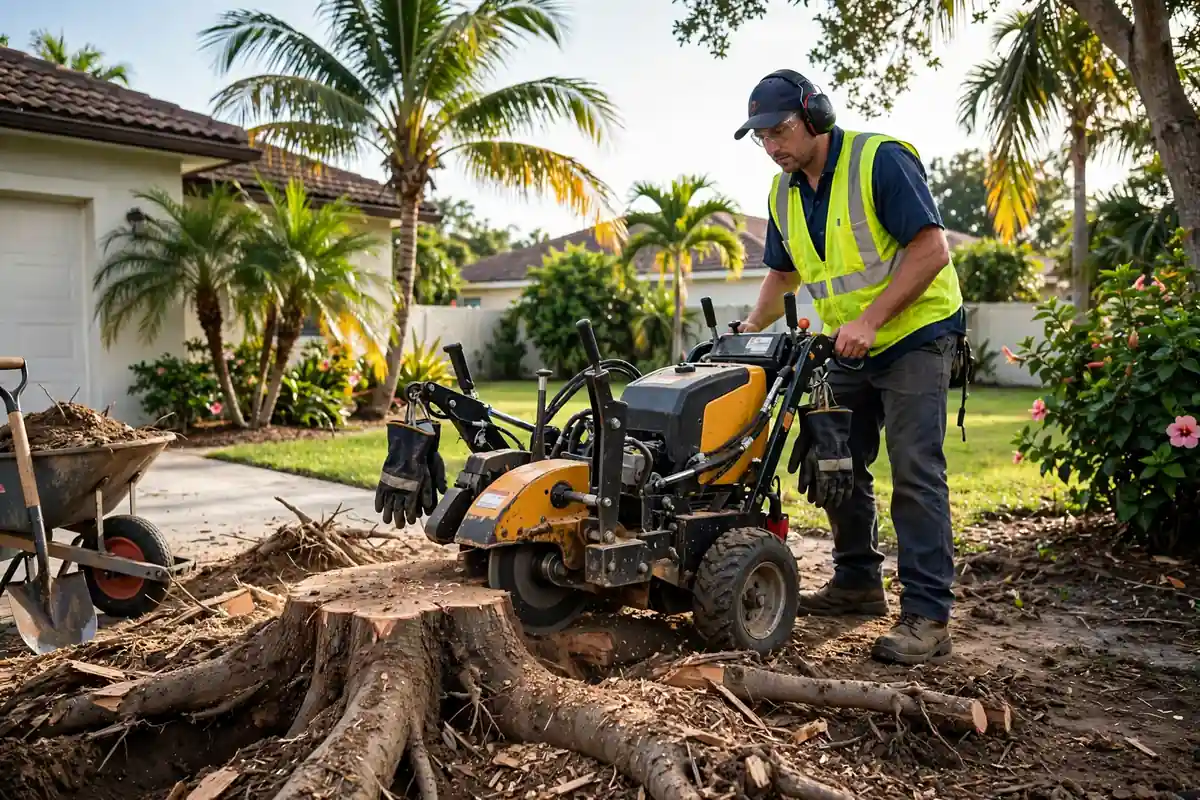
In short: Ficus, live oak, and royal palm roots invade sewer lines all year in Coconut Creek, FL 33063. This page covers professional root removal — cutting, jetting, and the permanent fixes that stop regrowth. Call (833) 713-2101 and we will camera-inspect your line and remove the roots properly.
If you own an older home in Coconut Creek with clay tile or cast-iron sewer pipe, tree roots are not a possibility — they are a certainty. A single ficus tree can send feeder roots dozens of feet through sandy soil, and every one of them is hunting for exactly what your sewer line offers: a constant supply of water and nutrients. Roots enter through the tiniest openings — a hairline joint separation, a fine crack — and once inside, they thrive in the rich flow, growing into dense, tangled masses that catch toilet paper and solids until the line chokes shut.
Here is what most homeowners learn the hard way: cutting roots out is relief, not a cure. A cable or cutter clears the mass, water flows again, and everyone declares victory — while the open joints that let the roots in remain wide open, and the tree outside keeps growing. In South Florida's year-round growing season, regrowth starts immediately. Real root removal has two phases: mechanically clearing the intrusion, and then permanently closing the entry points with lining, bursting, or targeted repair. Sewer Line Repair Crew does both, because doing only the first is scheduling your next emergency.
Signs You Need Tree Root Removal
Backups that return every 6 to 18 months
The classic root signature: the line is cleared, everything works, and then — like clockwork — the backup returns. That cycle is regrowth, not bad luck. Each cutting buys a shorter window than the last as the root mass's entry points widen.
The camera shows white fibrous masses at joints
On camera, root intrusion is unmistakable: pale, hair-like fibers hanging from joints and cracks, sometimes grown into solid mats that fill the pipe. If your inspection footage shows this at multiple joints, you are looking at the cause, not a symptom.
Gurgling and slow drainage that worsens gradually
Roots do not block a line overnight; they narrow it week by week. Drains that were fine in spring and sluggish by fall, with gurgling that comes and goes, are tracing the growth curve of a root mass inside the pipe.
Problems concentrated near large trees
When the backup always involves the bathroom nearest the big ficus, or the camera finds the worst intrusion on the side of the yard under the live oak canopy, the correlation is the diagnosis. Roots travel toward the line from the tree — the damage map points back at the canopy.
Toilet paper and solids snagging without grease
A line that catches paper and solids even in a household careful about grease is usually a line with a fibrous obstruction. Root masses act like nets: water passes, solids do not. If plunging clears it temporarily and it catches again, suspect roots.
A plumber already 'cleared roots' more than once
One root clearing is maintenance. Two or three is a pattern proving the entry points are still open. At that point, paying for another cutting without addressing the joints is the most expensive option — the permanent fix costs less than the next five clearings.
What Causes It
Roots invade for a simple reason: your sewer line is the most reliable water source in the yard. In Coconut Creek's sandy soil, moisture drains fast everywhere except inside the pipe, where flow is constant — and tree roots are extraordinarily sensitive to the vapor escaping through even hairline joint separations. Ficus trees are the worst offenders locally, with aggressive, far-reaching root systems that exploit any weakness; live oaks and royal palms are close behind. Once a single root hair enters, the nutrient-rich flow feeds explosive growth inside the pipe.
The pipe materials in older Coconut Creek homes practically invite it. Clay tile's bell-and-spigot joints separate as sandy soil shifts, opening ring-shaped doorways at every joint. Cast iron develops cracks and loose joints with age and corrosion. Even small separations are enough — a root hair is thinner than a thread. And because South Florida has no dormant season, there is no winter pause in the invasion: roots grow, enter, and expand twelve months a year, which is why root problems here escalate faster than in colder climates.
Our Step-by-Step Process
Camera inspection mapping every intrusion
Call (833) 713-2101 to start. We run a camera through the full lateral and map every root entry point — which joints, how severe, how far the masses extend. You see the intrusion on the monitor, so the scope of the problem is never a matter of opinion.
Mechanical root cutting
A motorized root cutter with the right head for your pipe — saw blades for heavy masses, chain flails for fibrous mats — chews through the intrusion at each joint, restoring full flow. The cutting is done carefully to clear roots without damaging the host pipe.
Hydro jetting to scour the joints
After cutting, hydro jetting flushes out every root fiber and scours the joint areas clean. This step matters: leftover fibers become the seed bed for faster regrowth. The line is jetted until the discharge runs clear and a camera pass confirms clean joints.
Permanent entry-point closure
With the line clear, we address the cause: pipe lining to seal every joint with a continuous, joint-free barrier; pipe bursting to replace a root-destroyed run entirely; or spot repair for an isolated bad joint. The camera footage guides which permanent fix fits your line.
Prevention schedule and monitoring
Even with sealed joints, we set a sensible monitoring rhythm — a camera re-check on an appropriate cycle, especially where large trees remain near the line. If any new intrusion ever appears, it is caught when it is small and cheap, not when it is an emergency.
Equipment & Materials
- Motorized root cutters with saw, blade, and chain-flail heads
- Hydro jetting units with root-slicing nozzle configurations
- CCTV cameras for intrusion mapping before and verification after
- Sonar locators marking intrusion points from the surface
- Pipe lining systems for permanently sealing root entry joints
- Pipe bursting rigs for replacing root-destroyed runs
Safety & Precautions
Root removal works around two hazards: the equipment and the trees. Root cutters and jetters are powerful machines operated only by trained technicians, with the work zone kept clear and cutters never run without the camera confirming what is ahead of them. Around the trees themselves, we protect the landscape: access pits are placed to avoid major root zones where possible, and we never recommend removing a healthy tree to save a pipe when lining or bursting can solve the problem while the tree stands. Wastewater exposure gets the standard hygiene discipline — protective gear, containment, disinfection — on every root job.
Coconut Creek, FL Factors
Tree root intrusion is Coconut Creek's signature sewer problem, and it is worse here than in most of Florida. The city's mature canopy — ficus trees with famously aggressive roots, sprawling live oaks, royal palms lining streets and yards — sits over a housing stock full of clay tile and aging cast iron with exactly the joint separations roots need. Sandy soil makes it worse in two ways: it lets roots travel fast and far toward the line, and it lets joints shift open more easily than heavier soils. With no dormant season, the invasion never pauses — a root mass cut in January is regrowing by March. That is why our root work here always pairs removal with permanent closure: cutting alone in Coconut Creek is a subscription to future emergencies, while lining or bursting the affected run ends the cycle even as the beautiful canopy stays exactly where it is.
Tree Root Removal by Area
Boca Raton, FL 33486
Tree Root Removal
Learn moreBoca Raton, FL 33487
Tree Root Removal
Learn moreCoconut Creek, FL 33063
Tree Root Removal
Learn moreCoconut Creek, FL 33066
Tree Root Removal
Learn moreCoconut Creek, FL 33073
Tree Root Removal
Learn moreCoral Springs, FL 33065
Tree Root Removal
Learn moreCoral Springs, FL 33067
Tree Root Removal
Learn moreDeerfield Beach, FL 33441
Tree Root Removal
Learn moreDeerfield Beach, FL 33442
Tree Root Removal
Learn moreDelray Beach, FL 33484
Tree Root Removal
Learn moreFort Lauderdale, FL 33308
Tree Root Removal
Learn moreHillsboro Beach, FL 33062
Tree Root Removal
Learn moreLauderhill, FL 33313
Tree Root Removal
Learn moreMargate, FL 33063
Tree Root Removal
Learn moreMargate, FL 33068
Tree Root Removal
Learn moreNorth Lauderdale, FL 33068
Tree Root Removal
Learn moreOakland Park, FL 33309
Tree Root Removal
Learn moreParkland, FL 33076
Tree Root Removal
Learn morePompano Beach, FL 33060
Tree Root Removal
Learn morePompano Beach, FL 33064
Tree Root Removal
Learn moreTamarac, FL 33319
Tree Root Removal
Learn moreTamarac, FL 33321
Tree Root Removal
Learn moreFrequently Asked Questions
Which trees cause the worst root problems?
Ficus trees are the worst offenders in Coconut Creek — aggressive, far-reaching roots that find every joint weakness. Live oaks and royal palms are also frequent culprits. But any large, mature tree near a clay or cast-iron lateral is a candidate; the camera shows us which tree's roots are actually inside your line.
If you cut the roots, will they just grow back?
Yes — if the entry points stay open. Cutting alone is temporary relief; regrowth in South Florida's year-round growing season starts immediately. That is why our root service pairs cutting with a permanent fix: lining to seal the joints, bursting to replace the run, or spot repair for isolated joints. Removal without closure is an incomplete job.
Do I need to cut down the tree?
Almost never. The problem is the pipe's open joints, not the tree's existence — and lining or bursting fixes the pipe while the tree stands. We place any access work to protect major root zones, and we recommend tree removal only in the rare case where no pipe solution can work around it.
How can you tell roots are the problem and not something else?
The camera. Root intrusion has an unmistakable appearance — fibrous white masses growing from joints and cracks — that no other sewer problem mimics. Call (833) 713-2101 for a camera inspection and you will see the answer on the monitor yourself.
Can roots break a PVC pipe?
Healthy, properly installed PVC with fused or well-gasketed joints resists roots very well — there are simply no openings to exploit. Roots attack weaknesses: separated clay joints, cracked cast iron, loose connections. That is why replacing a root-destroyed clay run with PVC or HDPE is a permanent fix.
How often should roots be cut if I do not line the pipe?
In Coconut Creek, annually at minimum for clay tile under mature trees — sometimes semi-annually for aggressive ficus. But compare honestly: a few years of scheduled cuttings costs more than lining the run once and never thinking about it again. We will show you both paths with your camera footage.
Don't Let a Sewer Problem Sit
Get connected with a trusted local specialist serving Coconut Creek and nearby areas — call anytime.
(833) 713-2101Free to call · No obligation · 24/7 emergency line
Serving Coconut Creek, FL