
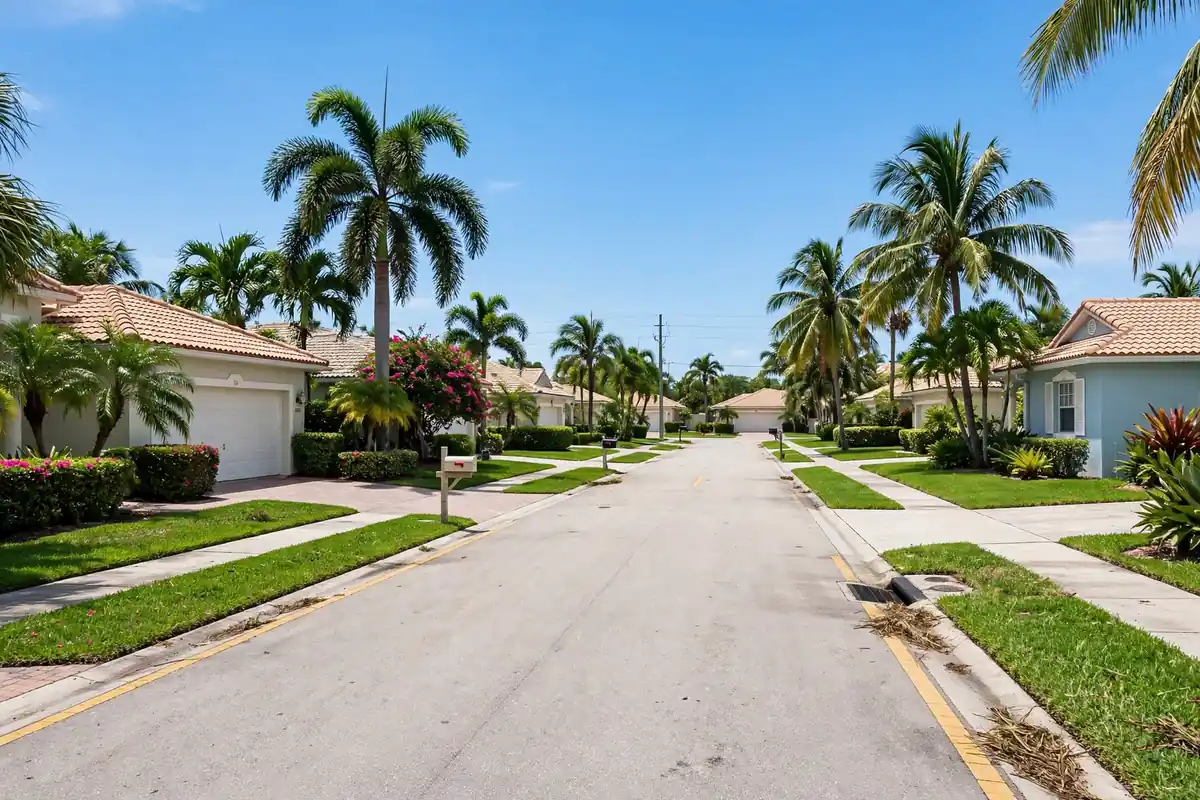
In short: ZIP 33308 covers northeast beachside Fort Lauderdale — Harbor Beach's luxury estates, the A1A beach corridor north of Sunrise Boulevard, Sea Ranch Lakes, and Lauderdale-by-the-Sea. The signature problem is saltwater: sewers below a tidal 1–3 ft water table take on saltwater infiltration through cracked cast iron. Call (833) 713-2101.
Area Facts
- Area
- Fort Lauderdale, FL
- ZIP
- 33308
- Housing
- 1960s–80s beachfront high-rise condos (A1A); Harbor Beach luxury estates (1950s–70s + rebuilds); Sea Ranch Lakes cottages
- Pipe stock
- 1960s–80s condo cast-iron stacks at end-of-life; clay tile + cast iron in estates; PVC in rebuilds
- Water table
- 1–3 ft tidal; chronic king-tide flooding on A1A; saltwater intrusion in shallow groundwater
- Landmarks
- Harbor Beach, Hugh Taylor Birch State Park, Anglin's Pier (Lauderdale-by-the-Sea), A1A beach corridor, Sea Ranch Lakes
ZIP 33308 is the northeast beachside strip of Fort Lauderdale: Harbor Beach's luxury single-family estates — 1950s–70s originals mixed with teardowns rebuilt in PVC — the 1960s–80s beachfront high-rise condos along A1A and Ocean Boulevard, the cottages of the Sea Ranch Lakes village, and Lauderdale-by-the-Sea's small hotels and 1960s garden condos around Anglin's Pier. Hugh Taylor Birch State Park holds the green anchor at the south end of the strip, and Port Everglades works just south of the area. The pipe stock is two stories in every sense: end-of-life 1960s–80s cast-iron stacks in the towers, with scale-choked bores and failing joints, and clay tile plus cast iron in the Harbor Beach estates — 1950s–60s originals now 60+ years old — with the luxury rebuilds on PVC. The whole strip sits on barrier-island beach sand with the Intracoastal Waterway pressing on its west side. The beach corridor north of Sunrise Boulevard mixes the high-rises with Lauderdale-by-the-Sea's low-rise beach town — small hotels and 1960s garden condos whose laterals get the same tidal-window survey as the towers.
Saltwater is the signature problem, and it works differently here than anywhere inland — as a two-front attack no inland joint faces. The sewers sit below a tidal water table at 1–3 ft, with chronic king-tide flooding on A1A and the Harbor Beach side streets pushing saltwater into the shallow groundwater. Cracked cast iron in that envelope does not just leak: it takes on saltwater infiltration that overloads the system hydraulically — the line carries groundwater it was never sized for — and the dissolved salts accelerate corrosion from the inside out, pitting the pipe and opening the joints further with every tide cycle. Sewer Line Repair Crew frames 33308 work as salinity-aware from the first camera run: the inspection documents infiltration and corrosion together, reading pitting, scale, and joint loss as one pattern, because here they are the same problem. And the logistics are brutal — A1A is a single corridor with no staging room, high-rise associations with valet garages and podium-level utility runs, estates with gates and landscaping — so trenchless methods that need only cleanout access win every bid, not as a preference but as a constraint.
How Sewer Work Changes in Fort Lauderdale
The saltwater-infiltration profile is the local hook, and it carries a diagnostic consequence: in 33308, infiltration is not just water getting in — it is salt getting in, and salt keeps corroding after the tide drops. A cracked joint that weeps inland groundwater for a decade might weep saltwater for five years before the corrosion finishes it — the timeline is compressed, and the boards and estate owners working off inland assumptions are working off the wrong timeline. That is why the crew's camera surveys here are timed for the tidal window and read for corrosion pattern, not just blockage: pitting, scale, and joint loss tell how far the salt has gotten, and the recommendation — reline now versus monitor — follows the corrosion, not the calendar. Harbor Beach estates add the long-private-lateral geometry to the same water story: laterals crossing seawall-protected lots to the mains, where open-cut means seawall risk and trenchless is the only sane bid, with the camera documenting the full run so the reline scope is exact. Valet garages mean the crew stages through the service entrance, not the porte-cochère — the access plan is drawn with the building engineer before the first camera goes in.
The second factor is logistics, and in 33308 logistics decide the method before the pipe does. A1A is a single corridor with no staging room — there is nowhere to put an open-cut operation on the strip — the high-rise condos bring association approvals, valet garages, and podium-level utility runs that route the work through the building's own infrastructure, and the estates bring gates, landscaping, and seawalls. Trenchless methods that need only cleanout access win every bid here because they are the only methods that fit: the rig stages in a driveway or a garage bay, the liner goes in through the cleanout, and A1A never closes. The crew scopes 33308 jobs around access first — where the cleanouts are, what the association allows, how the work phases around residents and guests — and the project plan is pure 33308: the pipe diagnosis is the same camera work as anywhere, but the execution plan is written for a strip with one road and no room.
Services Available in Fort Lauderdale
In 33308 the services that matter most are salinity-aware camera inspections timed for the tidal window — infiltration and corrosion documented as one pattern — trenchless CIPP relining and pipe bursting for estate laterals and high-rise cast-iron stacks, and root-intrusion cutting where the beachside canopy meets old clay tile joints. Association coordination is built into every condo scope: board packets with footage, phased resident notification, valet-garage and podium access planning. For Harbor Beach's long private laterals, trenchless is quoted as the default with seawall and landscape preservation explicit in the plan. For the luxury rebuilds on PVC, the service is inspection on a schedule — PVC does not care about saltwater the way cast iron does. Open-cut replacement is the last resort here, quoted with tidal dewatering and full restoration, because the strip gives it nowhere to work. Sea Ranch Lakes' village cottages get the estate-style survey — individual laterals, individual owners — unlike the tower stacks two blocks east on A1A.
Sewer Services in Fort Lauderdale
Commercial Sewer Services
Fort Lauderdale, FL 33308
Learn moreEmergency Sewer Repair
Fort Lauderdale, FL 33308
Learn morePipe Bursting
Fort Lauderdale, FL 33308
Learn morePipe Lining
Fort Lauderdale, FL 33308
Learn moreSewer Camera Inspection
Fort Lauderdale, FL 33308
Learn moreSewer Leak Detection
Fort Lauderdale, FL 33308
Learn moreSewer Line Cleaning
Fort Lauderdale, FL 33308
Learn moreSewer Line Installation
Fort Lauderdale, FL 33308
Learn moreSewer Line Replacement
Fort Lauderdale, FL 33308
Learn moreSewer Maintenance
Fort Lauderdale, FL 33308
Learn moreTree Root Removal
Fort Lauderdale, FL 33308
Learn moreTrenchless Sewer Repair
Fort Lauderdale, FL 33308
Learn moreFrequently Asked Questions
How does saltwater actually damage my sewer line?
Two ways at once, every tide cycle. Saltwater infiltrating through cracked cast iron overloads the line hydraulically — the system carries groundwater it was never sized for — and the dissolved salts accelerate corrosion from the inside out, pitting the pipe and opening the joints further. Each cycle repeats both, and the salts keep working after the tide drops. That is why 33308 pipe fails faster than the same pipe inland: it is being attacked chemically and hydraulically together, on a compressed timeline the camera reads as pitting and joint loss.
Our Harbor Beach estate has a long lateral to the street. What are our options?
Trenchless CIPP relining or pipe bursting through cleanouts or small access pits — the lateral is renewed without touching the seawall, the driveway, or the landscaping. Open-cut on a seawall-protected lot risks the seawall and destroys the grounds, so the crew scopes trenchless as the default, documents the camera findings for your records, and writes seawall and landscape preservation into the plan explicitly. Call (833) 713-2101 for the survey.
Our A1A condo tower has recurring multi-floor backups. Lateral or stack?
Almost always the stacks. The 1960s–80s towers run vertical cast-iron stacks at end-of-life, and saltwater groundwater accelerates their internal corrosion beyond the inland rate — scale chokes the bore, joints fail, and the backups hit multiple floors at once. The fix is a stack camera survey from the roof vent, then trenchless relining floor by floor through existing access: no wall demolition, no unit entry, phased around residents and guests. The building lateral gets its own survey, because a tower can have both failure modes.
Why do you time inspections for the tide?
Because infiltration is tidal here, and the corrosion follows the same clock. A low-tide camera can show a line that looks serviceable while the same line streams infiltration at high tide — and the corrosion pattern reads differently when the joints are actively weeping. Timing the survey for the tidal window, ideally the king-tide season, shows the board or the homeowner the line at its worst, which is the only condition worth deciding on. A calm-water survey is an optimistic survey, and nobody should buy a capital project off an optimistic reading.
Can you even stage equipment on A1A?
That is exactly why the work is trenchless. Open-cut needs staging room the strip does not have — A1A is a single corridor, and there is nowhere to put the operation. Trenchless needs a cleanout and a small work area: the rig stages in a driveway or a garage bay, and the corridor never closes. The crew plans every 33308 job around access first — cleanout locations, association rules, garage and podium routing — so the method fits the corridor instead of fighting it.
Our building is a luxury rebuild on PVC. Do we need anything?
Inspection on a schedule, nothing structural. PVC does not care about saltwater the way cast iron does — your risk is root intrusion at joints and the occasional belly, same as any PVC lateral, and the camera keeps it verified every few years. The building's association gets the footage for its records. The saltwater story is a cast-iron story; your rebuild opted out of it by repiping in PVC.
Get a Local Sewer Specialist on the Line Now
One call connects you with a Coconut Creek-area sewer line professional. Day or night, we're ready to help.
(833) 713-2101Speak with a local pro · No pressure
Serving Fort Lauderdale, FL 33308