
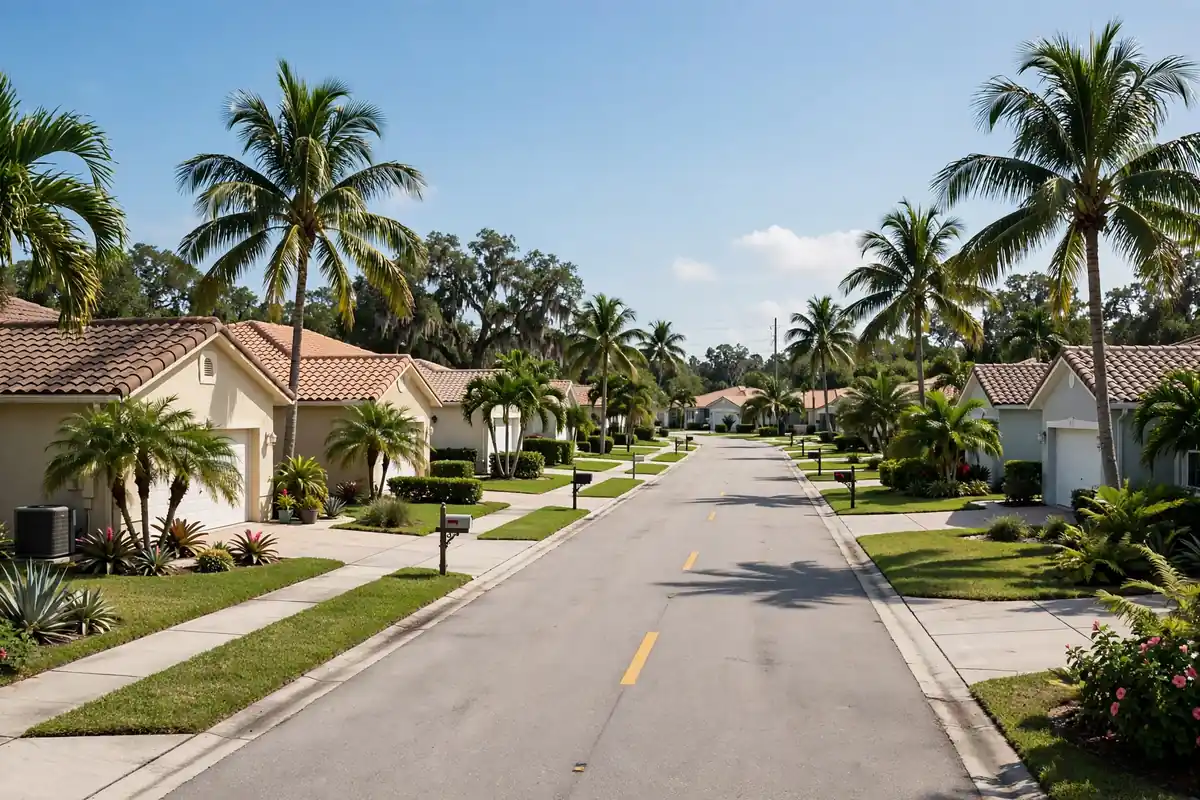
In short: Central and north Coral Springs (33067) is the quieter, newer suburbia past the original core: Turtle Run's 1997 single-family homes, Cypress Pointe's 2004 townhomes, and the Wiles Road corridor's condos and townhomes. Sewer Line Repair Crew treats this as the maintenance-market ZIP versus 33065's replacement market: 1980s–2000s PVC laterals fail to root intrusion and bellies, not to corrosion. Call (833) 713-2101.
Area Facts
- Area
- Coral Springs, FL
- ZIP
- 33067
- Housing
- Turtle Run single-family (1997 builds), Cypress Pointe townhomes (2004), Wiles Rd corridor condos/townhomes
- Pipe stock
- PVC era (1980s–2000s); 1980s condo buildings may retain cast-iron stacks
- Water table
- 2–6 ft; engineered swales still functional; Tall Cypress Natural Area holds seasonal water
- Landmarks
- Turtle Run, Wiles Rd corridor, Coral Landings, Tall Cypress Natural Area, Sawgrass Expressway access
ZIP 33067 picks up where the original Coral Springs leaves off: central and north, newer, quieter. Turtle Run's single-family homes — listings show 1997 builds at addresses like 4211 NW 67th Terrace — the 2004 Cypress Pointe townhomes at 6354 W Sample Road, and the Wiles Road corridor's condos and townhomes, including Coral Landings at 6270 W Sample Road, form a suburbia one generation younger than the 33065 core. The Tall Cypress Natural Area and Paul Barre Memorial Park edge the built neighborhoods with preserve land that holds seasonal water, and Sawgrass Expressway access puts the whole ZIP within the commuter belt. The pipe stock matches the era: 1980s–2000s PVC, with only the 1980s condo buildings possibly retaining cast-iron stacks now around 40 years old. The Wiles Road corridor's condos and townhomes were built as the city expanded north, and their shared parking courts drain through the same common-area laterals the HOAs maintain.
That one generation of difference is the whole sewer story here, and the crew states it plainly because homeowners hear 'sewer line' and assume 'replacement.' PVC laterals of 1980s–2000s vintage do not fail at joints the way 1960s cast iron and Orangeburg do — there is no internal corrosion narrowing the bore, no fiber pipe deforming with age, no scale choking flow. What fails here is intrusion and settlement: the mature 1990s canopy sends roots into joints, and sandy backfill occasionally lets a run belly. The drainage swales, unlike 33065's silted 1960s originals, still function — so the drainage-grade survey that is standard in the core is not the add-on here, and the camera inspection is the standard first step. Sewer Line Repair Crew's 33067 playbook is camera inspections, preventative hydro-jetting, and HOA common-area drain checks: maintenance, not replacement, documented with footage the homeowner or board keeps. Paul Barre Memorial Park's ballfields sit on the same engineered-drainage grid as the surrounding blocks — the whole ZIP was graded as one system, and the swales still move water the way the 1960s design intended.
How Sewer Work Changes in Coral Springs
The maintenance-market framing is the local hook, and it has to be defended with the camera on every visit — because the moment a contractor treats a 1997 PVC lateral like a 1968 cast-iron lateral, the homeowner gets sold a replacement they do not need. In 33067, replacement is almost never the answer. The winning services are camera inspections that find root intrusion early — before a joint is destroyed — hydro-jetting that keeps PVC laterals at full bore on a schedule, and short trenchless liners for the joints that keep re-intruding. For the Wiles Road corridor's condo and townhome communities, the product extends to common-area drains: shared laterals and area drains that the HOA owns and that clog on the same root-and-debris cycle, scoped as maintenance contracts with documented footage rather than emergency bids. The crew's 33067 reports are written to prevent over-selling as much as to sell: when the camera shows sound pipe, the report says so, and the recommendation is a maintenance date, not a project. The crew's maintenance contracts for the Wiles Road HOAs are calendar-based — spring camera, summer jetting — so the common-area drains never reach the backup stage.
The second factor is the preserve edge and the one older component in the ZIP. The Tall Cypress Natural Area holds seasonal water against the built boundary, which keeps the water table on the high side of the 2–6 ft range for the adjacent blocks and feeds root pressure toward laterals — a milder version of the 33065 dynamic, with functioning swales meaning no slab-edge ponding crisis, but the camera still finds the preserve-side joints intruded first. And for the 1980s condo buildings that may retain cast-iron stacks, the recommendation is a stack camera survey on the association's schedule: 40-year cast iron is the one 33067 component that shares the 33065 failure profile — scale, joint failure, multi-floor backups — and it belongs to the board, not the unit owner. The crew separates the two in every mixed-vintage survey: PVC laterals get the maintenance program, cast-iron stacks get the board packet. For the preserve-edge blocks, the crew tightens the inspection rhythm to every two years instead of three — the Tall Cypress water table earns the extra visit.
Services Available in Coral Springs
In 33067 the services that matter most are camera inspections with written findings for homeowners and HOA boards — reports that say 'sound pipe, see you in three years' when that is the truth — preventative hydro-jetting on the PVC laterals, and root-intrusion cutting with documented before-and-after footage for the preserve-edge and mature-canopy blocks. HOA common-area drain checks cover the Wiles Road corridor's shared laterals and area drains as scheduled maintenance. Where 1980s condo buildings retain cast-iron stacks, the crew offers stack camera surveys and trenchless relining scoped for association approval. Open-cut work is the rare exception — a collapsed or severely bellied section — and it is quoted with the high seasonal water table near the preserve accounted for in dewatering. The through-line: maintain what is sound, reline what keeps failing, replace almost nothing. Coral Landings and the other corridor communities get a single annual service day: the crew cameras and jets the common-area lines building by building, with the footage archived for the board. The annual service day includes a written common-area pipe map update — each year’s footage extends the corridor’s shared record.
Sewer Services in Coral Springs
Commercial Sewer Services
Coral Springs, FL 33067
Learn moreEmergency Sewer Repair
Coral Springs, FL 33067
Learn morePipe Bursting
Coral Springs, FL 33067
Learn morePipe Lining
Coral Springs, FL 33067
Learn moreSewer Camera Inspection
Coral Springs, FL 33067
Learn moreSewer Leak Detection
Coral Springs, FL 33067
Learn moreSewer Line Cleaning
Coral Springs, FL 33067
Learn moreSewer Line Installation
Coral Springs, FL 33067
Learn moreSewer Line Replacement
Coral Springs, FL 33067
Learn moreSewer Maintenance
Coral Springs, FL 33067
Learn moreTree Root Removal
Coral Springs, FL 33067
Learn moreTrenchless Sewer Repair
Coral Springs, FL 33067
Learn moreFrequently Asked Questions
My Turtle Run home was built in 1997. Do I need to worry about my sewer line?
Worry is the wrong word — maintenance is the right one. 1997 is PVC era, so your pipe is not corroding, scaling, or deforming. What the camera looks for is root intrusion at joints from the mature 1990s canopy and the occasional bellied run in sandy backfill. An inspection every few years, with cutting or jetting when the footage shows intrusion, keeps a 1997 lateral trouble-free indefinitely. If a contractor quotes you a full replacement on 1997 PVC without camera footage showing a collapse, get a second opinion — preferably the camera first.
How is 33067 different from the older part of Coral Springs?
One generation of pipe, opposite service profile. The 33065 core has 1960s–70s cast iron and Orangeburg with silted drainage swales — a replacement and regrading market where the camera pairs with a grade survey. Your 33067 neighborhood has 1980s–2000s PVC with functioning swales — an inspection and maintenance market where the camera is the whole first visit. Same city, different pipe, different playbook, which is why the crew leads with a camera here instead of a grade survey.
Our HOA on Wiles Road keeps getting common-area drain backups. Whose problem is that?
The association's — common-area laterals and area drains belong to the HOA, not the unit owners, and they clog on the same root-and-debris cycle as private laterals. The fix is a camera survey of the shared lines with a written report the board can act on, followed by jetting or root cutting on a maintenance schedule. Sewer Line Repair Crew documents the footage for the board's records and scopes the work as a maintenance contract, not a series of emergency bids.
Do the preserve areas near Tall Cypress affect my sewer?
On the preserve-edge blocks, mildly but really. Seasonal water held by the natural area keeps adjacent soils wetter and feeds root pressure toward laterals, so preserve-side joints intrude first — the camera checks that side with extra attention. It is not the slab-ponding crisis of 33065, because the swales work here; it is a maintenance-schedule adjustment, with the preserve-side joints inspected on a tighter rhythm than the street-side joints.
My condo building was built in the 1980s. Should we check the stacks?
Yes — that is the one 33067 component with a 33065-style risk profile. 1980s condo buildings may retain original cast-iron stacks now around 40 years old, and stacks fail from the inside: scale, joint failure, multi-floor backups. A stack camera survey gives the board documented condition before a failure forces the issue, and trenchless relining renews the stacks through roof vents without entering units. The board owns this decision; the unit owners own the lateral maintenance.
What happens on a maintenance visit?
The technician cameras the lateral from the cleanout to the street main, shows you the footage with measurements, and either clears what the camera found — roots cut, line jetted, with before-and-after footage — or confirms the line is sound with the footage as your record and a recommended next-check date. Written findings the same day, no project sold that the footage does not support. Call (833) 713-2101 to schedule.
Sewer Line Problems Don't Wait. Neither Should You.
Call now and get connected with a local sewer line specialist serving Coconut Creek, FL and nearby communities — 24/7.
(833) 713-2101Free to call · No obligation · 24/7 emergency line
Serving Coral Springs, FL 33067