
Few household emergencies feel as urgent as sewage coming up through a drain. The smell, the contamination risk, and the fear that it is still rising make every minute drag. Knowing what happens when the emergency crew arrives turns panic into a plan — and in South Florida, where storm-driven backups spike every rainy season, that knowledge is worth having before you need it.
This article walks through the emergency sewer repair visit step by step: what the crew does first, how they find the problem, what temporary and permanent fixes look like, and how you can prepare the house before they pull into the driveway. Sewer Line Repair Crew handles emergency calls around the clock in Coconut Creek at (833) 713-2101.
First Response: Containment and Safety
The crew's first priority is not the pipe — it is the people. Technicians will ask everyone to avoid the affected areas, confirm that children and pets are kept clear, and make sure standing water is not near electrical outlets or equipment. If the backup is severe, they may recommend stopping all water use in the house until the line is flowing again.
Before your call, you can help by doing the same things: keep family out of contaminated rooms, turn off water fixtures in the affected area, and do not try to plunge or snake the line yourself — forcing a blockage deeper can make the repair harder. Lay down old towels at the edges of dry rooms only if you can do so without stepping in wastewater; your safety comes first.
Diagnosis: Finding the Blockage
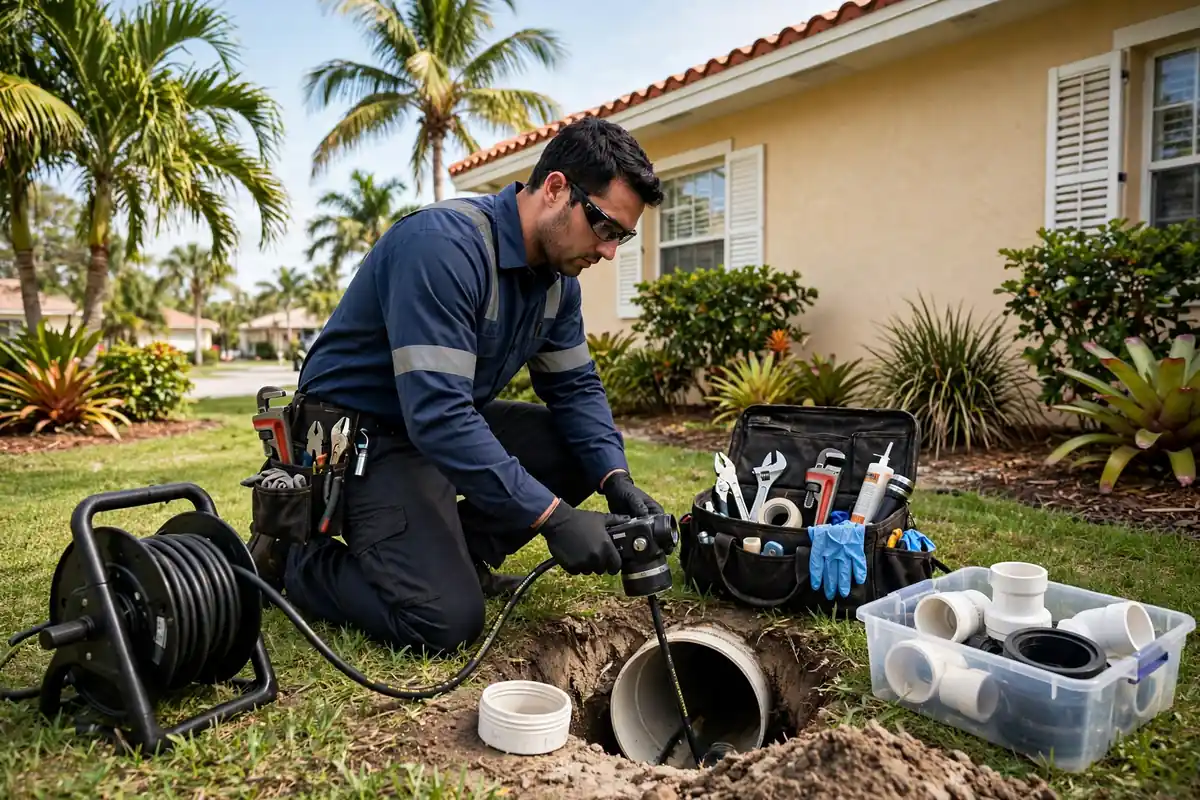
Once the scene is safe, diagnosis begins. The crew typically runs a camera through an accessible cleanout to see exactly what is blocking the line — roots, grease, a collapsed section, or an object that should never have been flushed. The footage pinpoints the location and depth, which determines whether the fix is a clearing, a spot repair, or something bigger.
If no cleanout is accessible, the crew may need to pull a toilet to get the camera in, or use the roof vent as a last resort. This is why knowing where your cleanouts are — and keeping them clear of landscaping — saves time in an emergency. The camera pass usually takes less than an hour and gives you a video record you should keep.
Clearing the Line: Temporary vs Lasting Fixes
Most emergency visits start with clearing: a drain machine or hydro jetter opens the line so water flows again and the immediate crisis ends. That clearing is sometimes the whole fix — a grease plug or a soft blockage may not return for years. But a clearing is also sometimes just the first step, buying time until a cracked or collapsed section can be repaired properly.
An honest crew will tell you which situation you are in. If the camera showed root intrusion through a cracked joint, the roots will grow back and the blockage will return, usually within months. Ask directly: 'Is this fixed, or will this come back?' The answer shapes whether you schedule a permanent repair now or watch and wait.
Permanent Repairs After the Emergency
When the line needs more than a clearing, the permanent repair gets scheduled — often within days, not weeks. Depending on the diagnosis, that may mean trenchless lining or pipe bursting, a spot excavation to replace a damaged section, or a full lateral replacement for a line at the end of its life.
The crew should explain the options with the camera footage as evidence, not as pressure. Ask what each option does to your yard, how long water service will be interrupted, and what the warranty covers. Emergency pricing applies to the after-hours visit itself; the permanent repair is a separate, planned job that you can evaluate with a clear head.
After the Crew Leaves: Cleanup and Prevention
Sewage is a Category 3 contaminant, so cleanup goes beyond mopping. Porous materials that touched wastewater — carpet padding, drywall near the floor, upholstered items — generally need removal, not just drying. Hard surfaces need disinfection, and the affected rooms need thorough ventilation. If the backup was large, a professional remediation company is worth the call.
Prevention starts with the 'why.' If roots caused it, schedule periodic root maintenance. If grease did it, change what goes down the kitchen drain. If the line is simply old, get a full camera inspection and a plan before the next emergency writes one for you. Keep the crew's number where the whole household can find it — a fast call shortens every backup.
Frequently Asked Questions
Should I call a plumber or a sewer specialist for a backup?
For a backup affecting multiple fixtures or coming up through floor drains, call a sewer specialist first. General plumbers handle interior plumbing well, but main-line blockages, camera diagnosis, and lateral repairs are the specialist's daily work.
Is it safe to stay in the house during a sewage backup?
It depends on the extent. A small backup contained in one bathroom is manageable if you avoid the area. Widespread backup with standing wastewater calls for professional cleanup, and families with young children, elderly members, or immunocompromised people should take it especially seriously.
What if the backup happens at night or on a weekend?
Sewer emergencies do not keep office hours, which is why emergency services exist. Call the emergency line rather than waiting until morning — every hour of standing sewage increases contamination and cleanup costs.
Will my homeowner's insurance cover the damage?
Standard policies usually exclude sewer backup unless you carry a specific endorsement. Document everything with photos and timestamps regardless, and call your agent early — the claims process rewards fast, thorough documentation.
Sewer Line Problems Don't Wait. Neither Should You.
Call now and get connected with a local sewer line specialist serving Coconut Creek, FL and nearby communities — 24/7.
(833) 713-2101Speak with a local pro · No pressure