
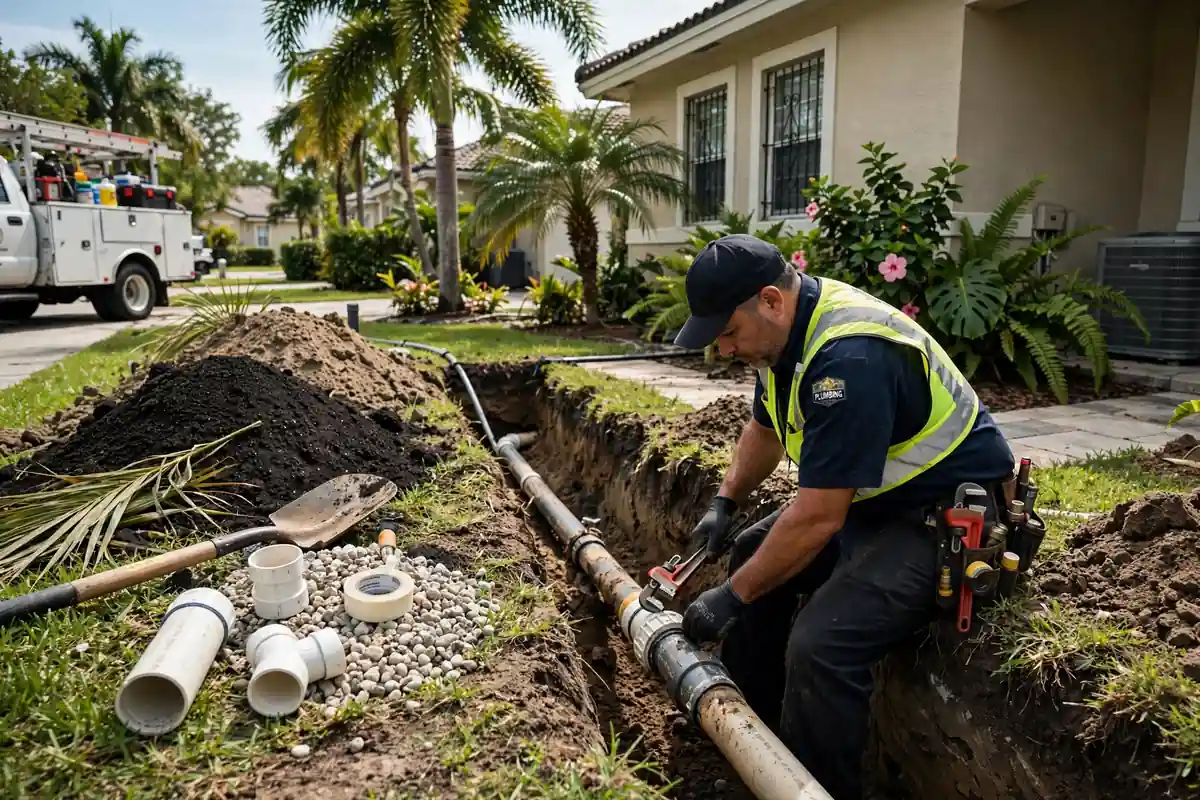
When a plumber says your sewer line needs repair, the next question is always about time: how long will the yard be torn up, how long without water, how long before life is normal again. The honest answer is that it depends — but the range is narrower than most homeowners fear, and the repair method is what sets it.
This guide breaks down realistic timelines for each major repair method, the factors that stretch a one-day job into three, and how to plan around the work. If your line is acting up ahead of South Florida's rainy season, these timelines also tell you when to schedule so the storms don't decide for you.
Spot Repairs: Hours, Not Days
A spot repair fixes one damaged section of pipe — a cracked joint, a small collapsed area, a root-crushed segment — through a single excavation. Once the crew exposes the bad section, cutting it out and installing the replacement typically takes a few hours of actual pipe work. Most spot repairs, including digging and backfill, wrap up within a single day.
The timeline assumes the problem section is located and accessible. A spot repair on a line three feet deep in a clear side yard is straightforward; the same repair under a concrete patio or beneath a mature tree's root zone takes longer because access itself becomes a project. The camera inspection beforehand is what tells the crew exactly where to dig — and keeps the excavation tight.
Trenchless Lining and Bursting: One to Two Days
CIPP lining jobs on residential laterals usually complete in one day. The morning covers the final cleaning and liner preparation; the afternoon is insertion and curing, with the post-lining camera check before the crew packs up. Larger diameters or longer runs can push into a second day, but the disruption stays minimal throughout.
Pipe bursting runs on a similar clock. Creating the entry and exit pits, bursting the old pipe, and pulling the new one is typically a one- to two-day job for a residential lateral. The surface restoration — filling pits, compacting soil, replacing sod — adds a day of lighter work. Compared with open-trench replacement, both trenchless methods cut the timeline roughly in half.
Full Open-Trench Replacement: Two to Five Days
Replacing an entire lateral by excavation is the longest standard method, usually two to five days depending on length, depth, and what sits above the line. Digging, pipe laying with proper bedding and slope, testing, backfill, compaction, and surface restoration each take their turn. Permits and inspections can add calendar days even when workdays are fewer.
This method is chosen when the line's condition rules out trenchless options — multiple collapses, severe bellies, or a pipe so degraded it cannot host a liner. It is also the method used for new installations and reroutes. The longer timeline buys you a brand-new line with a fresh full lifespan, which matters when you plan to stay in the home for decades.
What Stretches the Timeline
Five factors push jobs past the standard ranges. Deep lines take longer to expose safely. Long laterals mean more liner to cure or more trench to dig. Poor access — no cleanout, lines under structures or pools — adds preparation work. Rock or high water table in the soil complicates excavation. And surprises underground, like unmarked utilities or an old septic tank nobody mentioned, stop work until they are resolved.
Weather is the South Florida wildcard. Afternoon thunderstorms can halt excavation for safety, and saturated ground after a week of rain makes trench walls unstable. Scheduling repairs in the drier months, or at least ahead of the June-through-November storm season, avoids the most common weather delays.
Planning Your Schedule Around the Work
Ask the crew for a written sequence before work starts: which day is excavation, which day is pipe work, when is the inspection, and when is water service interrupted. Most methods only require a water-use pause of a few hours, not the whole project — but confirm the exact windows so you can plan showers, laundry, and cooking around them.
Keep the communication channel open during the job. Good crews report progress at natural breakpoints — camera done, line exposed, pipe in, test passed. If something underground changes the plan, you want to hear it the same day, not at the end. To get a realistic timeline for your specific line, call Sewer Line Repair Crew at (833) 713-2101 — the estimate follows a camera inspection of your actual pipe, not a generic guess.
Frequently Asked Questions
Can I stay in my home during sewer line repair?
Almost always, yes. Most repairs only interrupt water use for a few hours at a time, and crews schedule those pauses around your routine. Full-day water shutoffs are rare and always communicated in advance.
Does rain delay sewer repair work?
It can. Active lightning stops outdoor work for safety, and heavy rain can destabilize open trenches. Trenchless methods are less weather-sensitive, which is one more reason they are popular in Florida's storm season.
How long does the camera inspection itself take?
A standard residential camera inspection takes under an hour from setup to finished video. It is the fastest step in the whole process and the one that makes every estimate after it reliable.
Will my yard be back to normal right away?
Trenchless jobs leave only small pits to restore, usually finished the same week. Open-trench jobs need backfill compaction and settling time — expect the lawn or landscaping restoration to trail the pipe work by days to a couple of weeks.
Don't Let a Sewer Problem Sit
Get connected with a trusted local specialist serving Coconut Creek and nearby areas — call anytime.
(833) 713-2101Call anytime · Real help, fast