
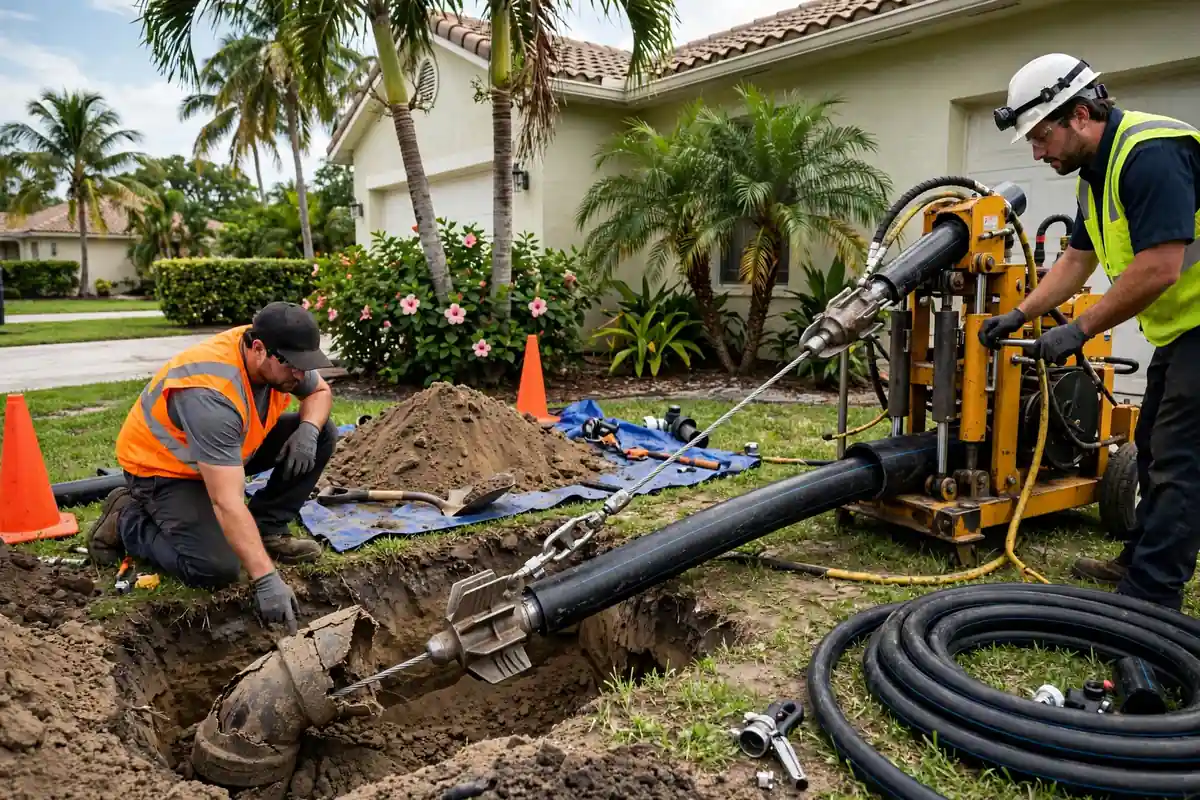
Pipe bursting sounds dramatic, and the name is honest: a powerful head travels through your old sewer pipe, fracturing it outward while dragging a brand-new pipe into place behind it. The old line is destroyed in the process — that is the point — and the new pipe takes its exact path with no trench in between.
This article explains the pipe bursting method in plain terms: how it works step by step, which pipes it can replace, where it beats lining or digging, and what to expect in your yard. For many Coconut Creek homes with aging cast iron or clay laterals, bursting is the trenchless answer when the old pipe is too far gone to line.
How Pipe Bursting Works, Step by Step
The job starts with two small pits: an entry pit at one end of the failing section and an exit pit at the other. A steel cable or rod string is threaded through the old pipe between them, and the bursting head — a cone-shaped tool slightly larger than the old pipe — is attached at the entry end along with the new pipe, usually HDPE or fused PVC.
A hydraulic puller at the exit pit draws the cable through. The bursting head fractures the old pipe outward into the surrounding soil while the new pipe slides into the void left behind, following the old line's path. The crew monitors pulling force throughout; a sudden spike can signal an unexpected obstruction. When the head reaches the exit pit, the new pipe is connected at both ends and the pits are backfilled.
Which Pipes Can Be Burst
Pipe bursting handles the brittle materials that fail with age in South Florida: clay tile, cast iron, concrete, and Orangeburg fiber pipe all fracture predictably under the bursting head. It works on a wide range of diameters, and it can even upsize — installing a larger new pipe than the old one, which is valuable when a home's drainage demand has grown.
The method needs a host pipe that will break apart rather than deform. Soft or ductile materials that fold instead of fracturing are poor candidates, and the surrounding soil must be able to absorb the displaced fragments. A camera inspection plus a look at the pipe material tells the crew whether bursting is viable before any pit is dug.
Bursting vs Lining: Choosing Between Them
Pipe bursting and CIPP lining are the two trenchless heavyweights, and the choice comes down to the pipe's condition. Lining needs a host pipe with enough structure to support the liner; it preserves the old pipe as a shell. Bursting needs the opposite — a pipe brittle enough to break — and it fully replaces the line with new material.
Bursting also wins when you need a bigger pipe or when the old line has collapsed sections a liner cannot bridge. Lining wins when access is extremely limited or when preserving the exact alignment under sensitive structures matters most. The camera footage decides, and a crew that offers both methods has no reason to push you toward the wrong one.
What Happens in Your Yard
Compared with open-trench replacement, pipe bursting is gentle on your property. The two pits are typically a few feet across — enough to work in, not enough to destroy a lawn. Driveways, patios, and landscaping between the pits stay intact because the new pipe travels underground along the old route.
After the pull, the crew backfills and compacts the pits, replaces sod or surface material, and connects the new line at both ends with proper fittings. Water service interruption is limited to the connection windows. If your lateral runs under a prized garden or a new paver driveway, bursting often saves the features that trenching would destroy.
Is Pipe Bursting Right for Your Home
Bursting fits homes where the old line is too damaged for lining but the route itself is sound — no severe bellies, no alignment changes needed, no collapsed sections packed with soil that the head cannot pass. It is a common recommendation for the cast iron laterals under Coconut Creek's mid-century homes, which corrode from the inside until the walls are too thin to host a liner.
The surest way to know is a camera inspection with a material assessment. If the footage shows brittle, fracturing pipe on a good alignment, bursting is likely your cleanest path to a new line. Call Sewer Line Repair Crew at (833) 713-2101 to schedule the inspection and get a straight answer about whether bursting fits your situation.
Frequently Asked Questions
Does pipe bursting damage nearby utilities?
Crews locate and mark nearby utilities before work begins, and the bursting path follows the existing pipe's alignment, which was already clear of conflicts. Proper planning keeps neighboring lines safe, which is why the pre-job utility locate is non-negotiable.
What kind of new pipe gets installed?
Most residential bursting jobs install HDPE (high-density polyethylene) or fused PVC — both jointless, root-resistant, and long-lived. The crew will tell you which material they use and why it suits your soil and depth.
Can pipe bursting increase my pipe size?
Yes — upsizing is one of bursting's signature advantages. Going up one diameter size is common and helps when the original line was marginal for the home's fixtures or when you plan additions.
How deep can pipe bursting work?
Bursting works at typical residential lateral depths and deeper. Depth mainly affects the pit excavation effort rather than the bursting itself, since the head operates entirely underground along the old pipe.
Get a Local Sewer Specialist on the Line Now
One call connects you with a Coconut Creek-area sewer line professional. Day or night, we're ready to help.
(833) 713-2101Speak with a local pro · No pressure