
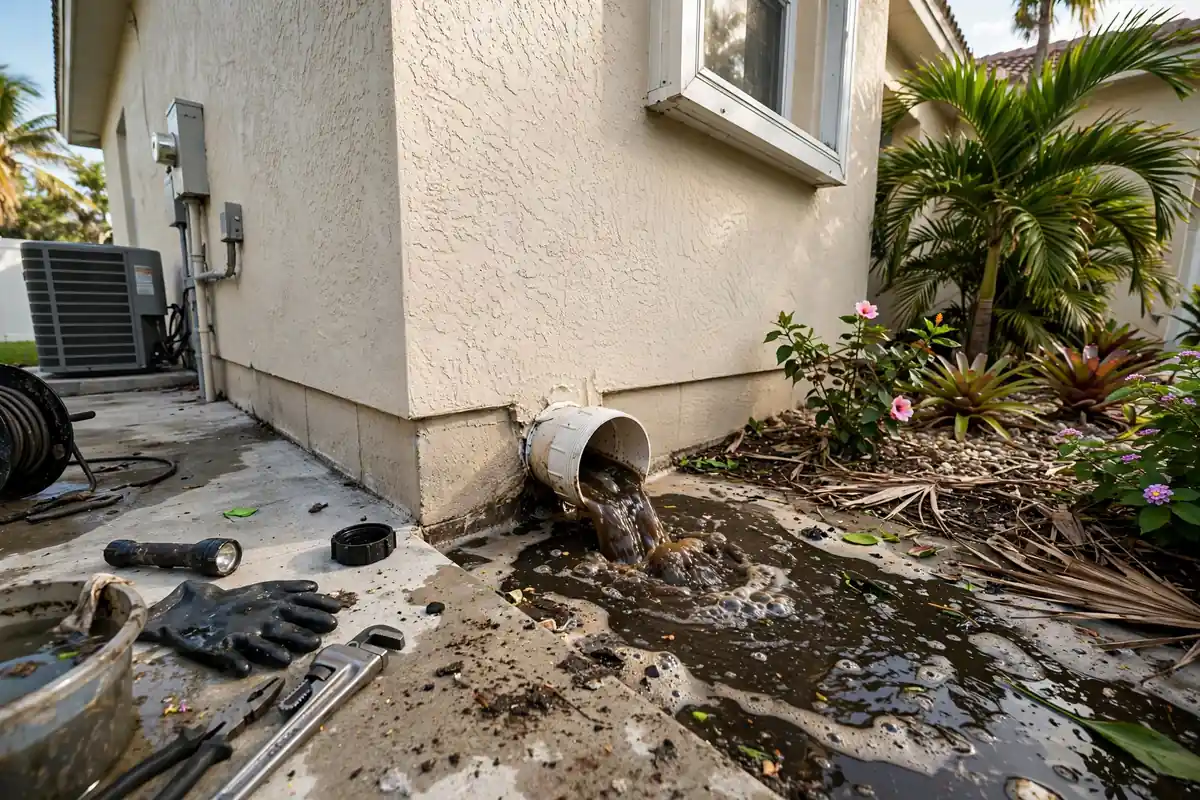
After a sewer backup, the second shock is often the insurance conversation. Many Coconut Creek homeowners discover — at the worst possible moment — that their standard homeowner's policy excludes sewer backup damage entirely. The coverage exists, but it usually comes as an endorsement you have to ask for before the disaster.
This guide explains how sewer backup insurance works in Florida, what the endorsements typically cover, and — most importantly — how to document damage so your claim survives the adjuster's review. Even if you never file, the documentation habits here protect you in disputes with landlords, HOAs, and contractors too.
What Standard Policies Exclude
Most standard HO-3 homeowner policies in Florida cover sudden water damage from burst plumbing inside the home, but they draw a hard line at water that backs up through sewers or drains. That exclusion lives in the policy's fine print under 'water damage' or 'sewer backup' language, and it applies whether the backup came from your lateral, the city main, or storm-driven overload.
Flood insurance is a separate product with its own rules, and it generally does not cover sewer backup either — it covers rising water from outside. The gap between the two is exactly where backup endorsements fit. Pull out your policy declarations page today and look for the words 'sewer,' 'drain,' or 'sump' — if you do not see an endorsement listed, you are likely uncovered.
Backup Endorsements: What They Cover
A sewer backup endorsement (sometimes called 'water backup coverage') adds protection for damage when water backs up through sewers, drains, or sump systems. It typically covers the cost to clean up and repair damage to your home's structure and belongings, up to a stated limit that is often much lower than your dwelling coverage — common limits run in the low thousands to tens of thousands.
Read the endorsement for its exclusions. Many exclude damage from flooding, from poor maintenance, or from backups caused by the homeowner's negligence — like flushing wipes for years. Some require the backup to be sudden and accidental. Knowing these boundaries before you file keeps expectations realistic and your claim strategy sound.
Documenting Damage: The First 48 Hours
Documentation starts the moment you discover the backup. Photograph and video every affected room before anything is moved or cleaned — standing water levels, damaged flooring, wet drywall, ruined belongings. Capture wide shots for context and close-ups for detail, and make sure timestamps are on.
Then build a paper trail. Note the date and time of discovery, when you called for emergency service, and who responded. Keep every invoice: emergency clearing, remediation, repairs, replacement of belongings, and even hotel stays if the home is uninhabitable. Adjusters deny what they cannot verify, and a dated photo log plus receipts is the hardest evidence to argue with.
Filing the Claim: What Adjusters Look For
Call your agent or carrier promptly — most policies require prompt notice, and delays give the insurer room to question the claim. Describe the event factually: what happened, when, and what you did about it. Do not speculate about causes on the recorded call; the camera inspection and the plumber's report will establish cause better than a guess.
The adjuster will look for three things: that you had the coverage in force, that the damage matches a covered cause, and that your documentation supports the amounts claimed. They may also ask about maintenance — when the line was last cleaned or inspected — because neglected lines can trigger exclusions. Having inspection records on hand turns that question from a threat into a non-issue.
Before the Next Storm Season
Hurricane season is the highest-risk window for backups in South Florida, when municipal systems and private laterals both get overwhelmed. Review your coverage every spring: confirm the endorsement is active, check that the limit still fits your home's value, and photograph your home's current condition as a baseline.
Pair the paperwork with prevention. A pre-season camera inspection finds the root intrusion and cracked joints that turn heavy rain into indoor flooding. If the footage shows trouble, schedule the repair before June — emergency work during a storm costs more and waits longer. For the inspection or the repair, Sewer Line Repair Crew is reachable at (833) 713-2101.
Frequently Asked Questions
Does renter's insurance cover sewer backup damage to my belongings?
Standard renter's policies have the same backup exclusion, but many offer a similar endorsement. If you rent in a ground-floor unit — where backups strike first — ask your agent about adding it.
Will filing a backup claim raise my premiums?
Any claim can affect future premiums, and insurers weigh water-damage claims seriously. That is a reason to document carefully and claim accurately — not a reason to skip coverage you might desperately need.
What if the backup came from the city main, not my line?
Your endorsement typically covers the damage to your home regardless of where the backup originated. The insurer may then pursue the municipality for reimbursement, but that is their process — your claim proceeds on your policy.
How do HOA and condo rules interact with backup claims?
In condos and HOA communities, responsibility for laterals often splits at defined points — the association may own the main while you own the branch to your unit. Know your documents' division of responsibility before a backup forces a three-way argument between you, the HOA, and the insurer.
Sewer Line Problems Don't Wait. Neither Should You.
Call now and get connected with a local sewer line specialist serving Coconut Creek, FL and nearby communities — 24/7.
(833) 713-2101No obligation · Emergency help 24/7