
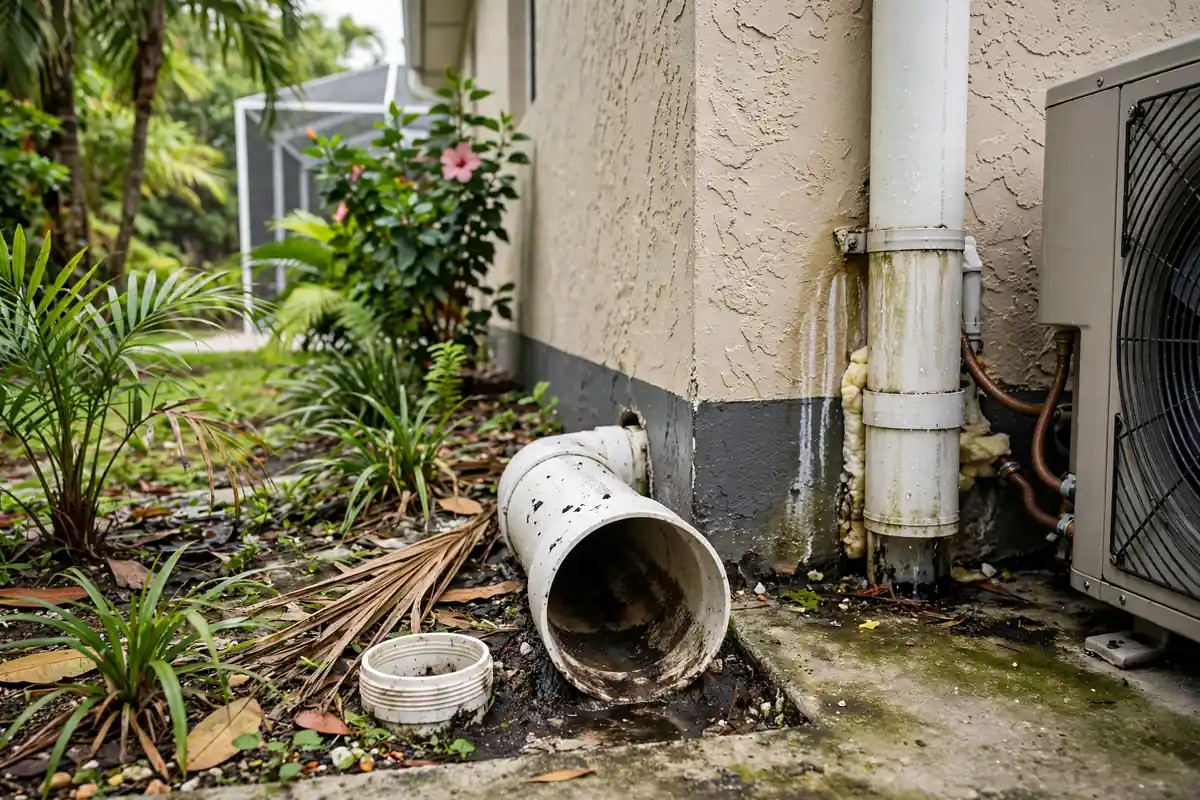
The rotten-egg smell of sewer gas is unmistakable, and it is never something to ignore. Sometimes the cause is trivial — a dried-out drain trap in a guest bathroom nobody uses. Sometimes it signals a cracked vent stack, a failed wax ring, or a broken sewer lateral leaking gas into your home. Telling the difference matters because the health effects scale with exposure.
This guide covers the common causes of sewer gas odor in Coconut Creek homes, what the gases actually do to your health, and the steps that separate a quick DIY fix from a call for professional help. When the smell persists after the easy fixes, that is your cue to investigate the line itself.
Common Causes, From Simple to Serious
Start with the simple: every drain has a P-trap that holds water as a seal against sewer gas. In rarely used bathrooms, laundry sinks, or floor drains, that water evaporates — sometimes within weeks in Florida's heat — and gas flows freely into the room. Running water in every fixture for a minute restores the seals and often ends the mystery immediately.
If the smell persists, the causes get more structural. A cracked or disconnected vent pipe lets gas escape inside walls instead of rising out the roof. A failed wax ring under a toilet breaks the seal between the fixture and the flange. And a cracked or separated sewer lateral can release gas through the soil and foundation. The pattern of the smell — one bathroom versus the whole house, constant versus after rain — helps narrow it down.
What Sewer Gas Does to Your Health
Sewer gas is a cocktail, but hydrogen sulfide is the headline component — the rotten-egg smell — joined by methane, ammonia, and carbon dioxide. At low concentrations, the effects are irritation: headaches, dizziness, nausea, and eye, nose, and throat discomfort. These symptoms often improve when you leave the house and return when you come back, which is itself a diagnostic clue.
At higher concentrations, hydrogen sulfide deadens the sense of smell — a dangerous trap, because the warning odor fades just as the danger rises. Prolonged or heavy exposure can cause serious respiratory and neurological effects. This is not meant to frighten but to frame the response: persistent sewer gas deserves prompt investigation, not a scented candle. If anyone in the home has breathing difficulties, ventilate the space and get fresh air first, then investigate.
Quick Checks You Can Do Today
Walk the house and run water in every sink, tub, shower, and floor drain for sixty seconds — including the guest rooms and the laundry area. Pour water into any floor drains in the garage or patio. If the smell disappears within a day, dried traps were the culprit, and a monthly five-minute routine prevents recurrence.
Next, check the toilets: rock each one gently to feel for looseness, and look for water staining or softness in the flooring around the base — signs the wax ring may have failed. Sniff around the base after a flush. If one toilet is the clear source, the fix is usually reseating it with a new ring, a straightforward job for a plumber.
When the Smell Points to the Sewer Line
Whole-house odor, smell that worsens after heavy rain, or gas odors combined with slow drains and gurgling point past the fixtures to the lateral itself. Rain raises the water table and pushes gases through cracks that stay quiet in dry weather — a classic South Florida pattern where summer storms unmask a failing line.
A camera inspection is the definitive next step. It finds the cracks, separated joints, or collapsed sections releasing the gas, and it locates them precisely for repair. Lining or spot repair then seals the line and the odor source together. If your home was built in the 1960s through 1980s with original cast iron, age alone makes the lateral a prime suspect.
What to Do Right Now
For immediate relief, ventilate: open windows, run exhaust fans, and get fresh air moving through the affected rooms. Do not use open flames or smoke near strong gas concentrations — methane is flammable, and while household levels rarely reach ignition risk, caution costs nothing.
Then work the checklist in order: refill the traps, check the toilets, and note the smell's pattern. If the easy fixes fail or the pattern points to the line, call Sewer Line Repair Crew at (833) 713-2101 for a camera inspection. Persistent sewer gas is your plumbing's early warning system — answering it early is always cheaper and healthier than ignoring it.
Frequently Asked Questions
Is a little sewer smell normal in an old house?
Occasional faint odor from a dry trap is common and harmless once fixed. A persistent or strong smell is never 'just old-house character' — it means gas is entering where it should not, and the source should be found.
Can sewer gas set off my carbon monoxide detector?
No. CO detectors respond to carbon monoxide specifically, not to hydrogen sulfide or methane. Do not rely on a CO detector to warn you about sewer gas — your nose is the detector, until it is not, which is why persistent odor needs action.
Why does the smell get worse when it rains?
Rain raises the groundwater around your lateral and increases pressure in the system, forcing gases through cracks and bad joints that stay sealed in dry conditions. A rain-linked pattern strongly suggests lateral damage rather than a dry trap.
Should I pour bleach down the drain to kill the smell?
Bleach masks odor temporarily but does nothing for the source, and it can damage septic-system biology if you are on septic. Fix the seal or the pipe — do not chemically perfume the symptom.
Fast Help for Sewer Line Trouble
Call now for a local sewer line specialist in the Coconut Creek area. No obligation, just answers.
(833) 713-2101Talk to a specialist now · Free call