
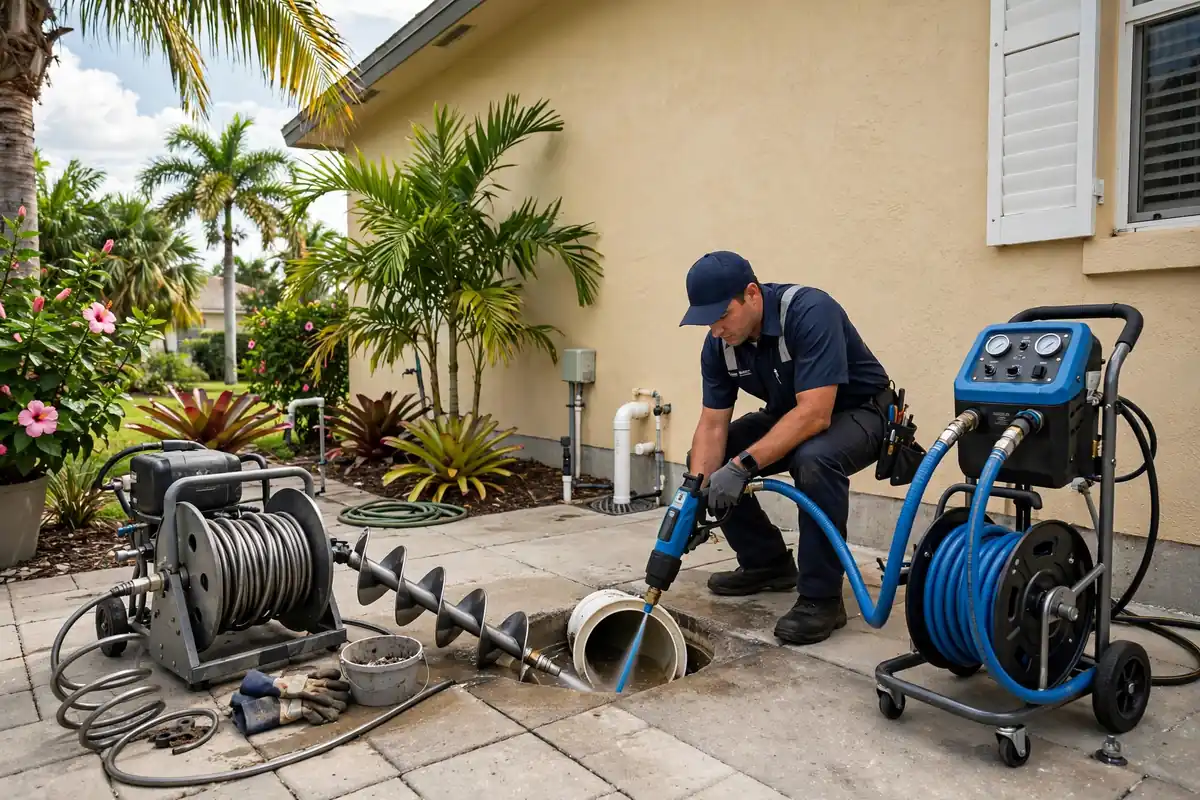
When a sewer line slows down, two cleaning methods dominate the conversation: the traditional drain cable — a spinning auger that chews through blockages — and hydro jetting, which blasts the pipe walls with high-pressure water. Both clear lines, but they do very different work, and choosing the right one saves you from paying twice.
This guide compares mechanical cleaning and hydro jetting head to head: what each one actually does inside the pipe, which blockages each handles best, when jetting is overkill, and when a cable is not enough. For Coconut Creek's root-prone and grease-prone laterals, the distinction matters every rainy season.
Mechanical Cleaning: The Spinning Cable
A drain machine feeds a flexible steel cable with a cutting head into the line. The head spins at high speed, boring through soft blockages and shaving root masses off the pipe walls. Different heads handle different jobs — blades for roots, retrievers for objects — and the technician feels the resistance change as the blockage gives way.
Mechanical cleaning is fast, affordable, and excellent at one thing: restoring flow through a blocked pipe. Its limitation is what it leaves behind. The cable punches a path through the blockage but does not scour the pipe walls, so grease films, scale, and root stubble remain. For a simple clog in an otherwise healthy line, that is perfectly fine — the line is clear and the job is done.
Hydro Jetting: The Pressure Washer for Pipes
Hydro jetting sends water through the line at thousands of PSI through a specialized nozzle that sprays backward and forward simultaneously. The backward jets pull the hose through the pipe while scouring the walls; the forward jet breaks up what lies ahead. The result is a pipe cleaned to near-original diameter, not just a hole punched through a clog.
Jetting removes what cables leave: grease coatings, mineral scale, sludge, and fine root hairs. It is the deeper clean, and for lines with chronic buildup it resets the clock further. The trade-off is that jetting needs a pipe strong enough to take the pressure — a severely deteriorated line can be damaged, which is why reputable crews camera-inspect before jetting an unknown line.
Which Blockage Calls for Which Method
Match the method to the material. Soft blockages — paper buildup, minor grease, small root intrusions — clear fine with a cable and may never need more. Heavy grease from kitchen lines, thick scale in old cast iron, and dense root masses respond far better to jetting's wall-scouring action.
Recurring blockages are the signal to step up. If the same line needs cabling every few months, the cable is treating the symptom while buildup or roots keep returning. A camera inspection followed by jetting usually breaks the cycle — and if the camera shows structural damage underneath the buildup, you have found the real project.
When Cleaning Is Not Enough
Cleaning restores flow; it does not repair pipe. If the camera shows cracked walls, separated joints, collapsed sections, or bellies holding water, no amount of jetting fixes the geometry. Cleaning a structurally failed line is like mopping around a leaking roof — the water keeps coming.
This is the moment the conversation shifts from maintenance to repair: lining, bursting, or spot replacement for the damaged sections. A good crew tells you when you have crossed that line instead of selling you another cleaning. Ask after every camera inspection: 'Is this a cleaning problem or a pipe problem?' The answer determines your next dollar.
Building a Cleaning Schedule That Works
For most homes, cleaning is event-driven: slow drains or gurgling trigger a visit. But homes with known root intrusion, heavy kitchen grease output, or aging cast iron benefit from scheduled maintenance — typically annual or biennial jetting or cabling before the rainy season, when groundwater pressure makes marginal lines fail.
Keep records of each cleaning: date, method, what was found, and any footage. The pattern across visits tells you whether the line is stable or deteriorating — and that record is gold when you eventually sell the home or file an insurance claim. To set up a schedule or get a camera-first assessment, call Sewer Line Repair Crew at (833) 713-2101.
Frequently Asked Questions
Is hydro jetting safe for old cast iron pipes?
It depends on the pipe's condition, which is why a camera inspection comes first. Sound cast iron handles jetting well; paper-thin, heavily corroded iron may not. The inspection lets the crew set safe pressure or recommend repair instead.
How long does a cleaning last?
A cable clearing of a simple clog can last years. In lines with active root intrusion, regrowth typically brings symptoms back within six to eighteen months unless the entry points are repaired. Jetting usually buys more time than cabling on buildup-related slowdowns.
Can I rent a drain machine and do it myself?
Rental machines exist, but they injure inexperienced users regularly — the cable can kink, whip, or get stuck, and you get no camera diagnosis. For main-line blockages especially, the professional visit includes the inspection that tells you what you are actually dealing with.
Does cleaning help before hurricane season?
Yes. A fully clear line handles storm-driven inflow far better than a partially blocked one. Many homeowners schedule a cleaning or inspection in May, before the June rains, as cheap flood insurance for their lateral.
Talk to a Sewer Line Pro Today
Describe the problem once — a local specialist serving Coconut Creek, FL plans the visit. 24/7 emergency line.
(833) 713-2101Free to call · No obligation · 24/7 emergency line