
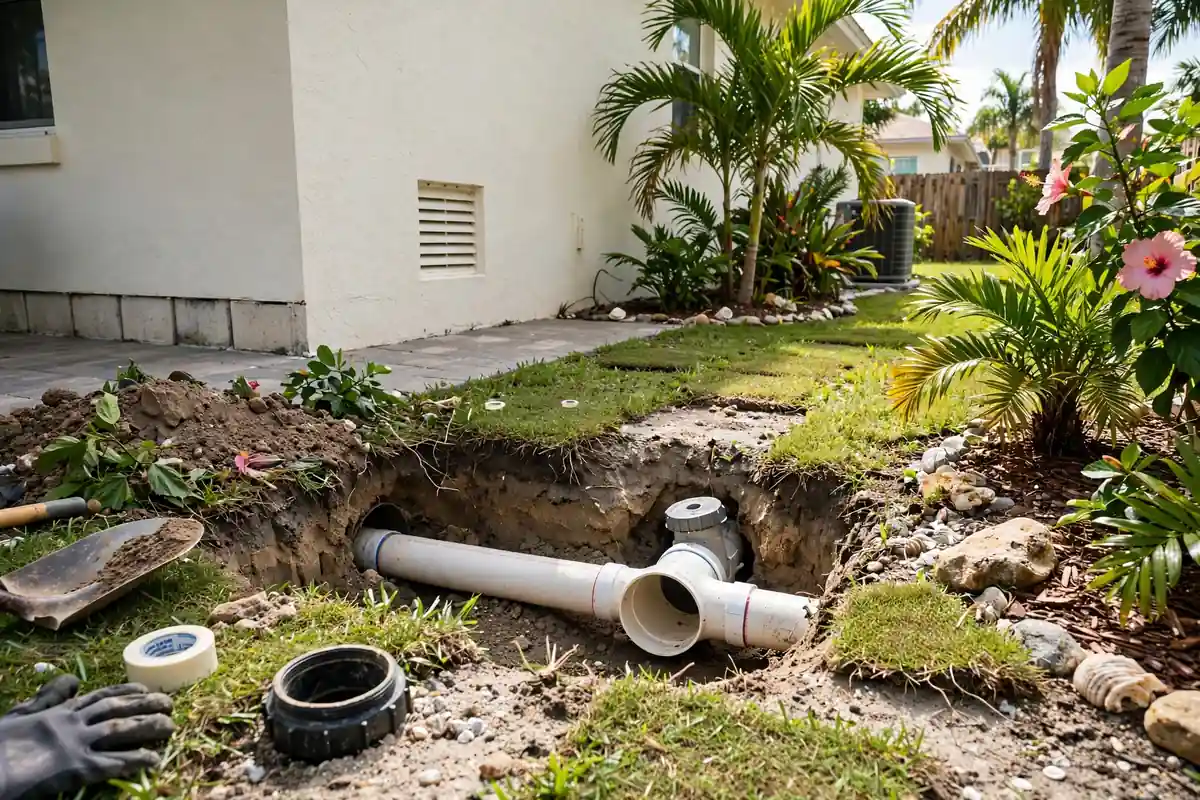
Somewhere in your property records, a few lines of legal language may give someone else the right to dig up part of your yard. That is a sewer easement: a recorded right for a utility or municipality to access, maintain, and repair sewer infrastructure crossing your land. Most homeowners never think about it — until a repair crew, a neighbor's project, or a fence dispute brings it to the surface.
This guide explains sewer easements in plain language: what they are, how to find yours, what they mean when your lateral needs repair, and where the common conflicts arise in Coconut Creek's HOA neighborhoods. A little easement literacy now prevents expensive surprises later.
What an Easement Actually Is
An easement is a legal right to use someone else's land for a specific purpose, without owning it. A sewer easement typically grants the city, county, or a utility the right to access a strip of your property where a sewer main or lateral runs, to inspect it, maintain it, and excavate it when repairs are needed. The easement is recorded against your property's title and transfers with every sale.
Easements come in flavors. A utility easement may cover sewer, water, electric, and telecom in one corridor. A drainage easement covers stormwater flow. A private easement might let a neighbor's lateral cross your lot to reach the main. The document creating the easement defines its width, location, and permitted activities — and that document, not anyone's memory, is what controls.
How to Find the Easements on Your Property
Start with your property survey — the drawing from your home purchase that shows lot lines, setbacks, and easement corridors, usually as dashed lines with labels. Your title commitment or title policy from closing lists recorded easements by document number. In Broward County, recorded documents are searchable through the county's official records, often online.
If the survey is missing, the city or county engineering department can often tell you where public sewer mains and their easements run. For HOA communities, the association's plat and declaration documents map common-area utilities and maintenance responsibilities. Finding the paperwork before a project starts is always cheaper than discovering the easement mid-excavation.
What Easements Mean for Your Sewer Repair
Here is the practical part. If your lateral repair stays within your own lateral and your own property, the easement usually does not change much — you hire the crew, they dig, they restore. But if the work touches a sewer main inside a public easement, or if the crew needs to cross a neighbor's easement to reach your line, permissions and coordination enter the picture.
The easement holder — often the city — generally has the right to excavate within the easement and restore the surface afterward, though restoration standards vary. You typically cannot build permanent structures inside an easement corridor: no sheds, no pools, no concrete patios. Planting is usually allowed but at your own risk — the easement holder can remove plantings to access the line without compensating you.
Common Easement Conflicts in HOA Neighborhoods
Coconut Creek's planned communities add a layer: the HOA's documents may assign lateral maintenance differently than the city's easement map suggests. A frequent dispute is the lateral segment between the home and the main — the homeowner often owns it, the HOA may claim maintenance responsibility up to a point, and the city's easement may cover only the main itself. When a backup happens, all three parties point at each other.
Resolve it on paper before the emergency. Read your HOA declaration's utility and maintenance sections, compare them with the recorded easement, and get the division of responsibility in writing from the association if it is ambiguous. When you call for a camera inspection, the footage plus the documents together tell the whole story of who fixes what.
Protecting Yourself Before You Dig or Build
Before any project over or near your lateral's path — a pool, a patio, a fence, a major planting — verify the easement corridor and the line's location. Call 811 for the free utility locate, and consider a private camera inspection with a sonde locate to map your lateral precisely. Building an expensive new pool over a sewer easement is a mistake you only make once.
If a repair crew needs easement access across your property for a neighbor's or the city's line, you are generally required to allow reasonable access — but you can ask about the restoration plan in writing. Photograph the area beforehand. And if your own lateral needs work near an easement boundary, one call to Sewer Line Repair Crew at (833) 713-2101 arranges both the camera inspection and the utility locate in a single visit.
Frequently Asked Questions
Can I plant trees inside a sewer easement?
Usually yes, but it is unwise directly over the line — roots and easements are a bad combination, and the easement holder can remove plantings for access without paying you. Plant small-rooted species well clear of the corridor.
Who pays if the city digs up my yard inside an easement?
The easement typically obligates the holder to restore the surface to reasonable condition, but 'reasonable' rarely means your prize landscaping. Document the before-condition with photos and get the restoration commitment in writing.
Does an easement show up when I sell my home?
Yes — recorded easements appear in the title search, and sellers generally must disclose known easements. A buyer who discovers an undisclosed easement after closing has legal options, which is why the title work matters.
Can an easement be moved or removed?
Sometimes, through a legal process with the easement holder's agreement — for example, when a line is rerouted. It requires recorded documentation and often the holder's formal release. It is not a DIY paperwork project; involve a real estate attorney.
Sewer Line Problems Don't Wait. Neither Should You.
Call now and get connected with a local sewer line specialist serving Coconut Creek, FL and nearby communities — 24/7.
(833) 713-2101Call anytime · Real help, fast