
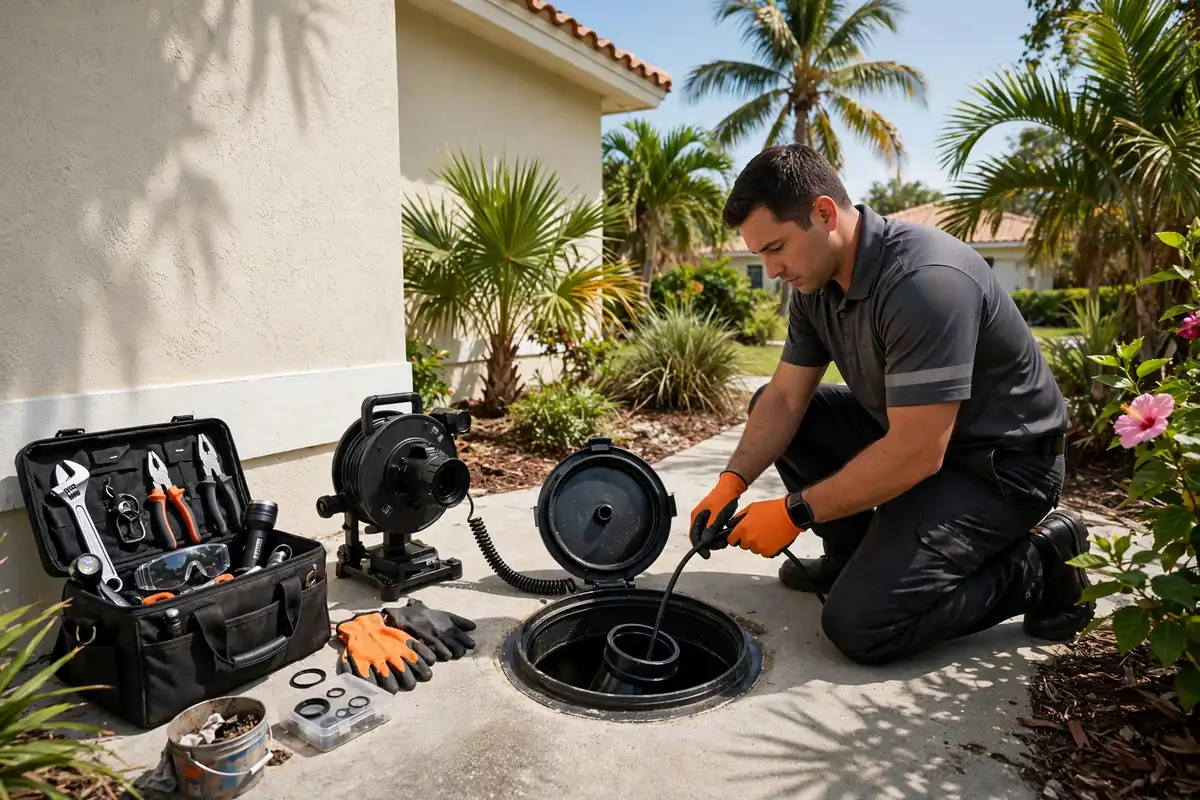
A sewer maintenance plan is a standing agreement: scheduled inspections, periodic cleanings, and priority response when something goes wrong, in exchange for a predictable arrangement instead of emergency scramble. Done right, it catches root intrusion and scale while they are cheap problems instead of expensive ones.
This guide explains what a sewer maintenance plan should actually include, how to judge whether one is worth it for your home, and the red flags that mark plans designed to sell rather than to maintain. In Coconut Creek's root-heavy, storm-heavy environment, the right plan is genuinely useful — the wrong one is a subscription to nothing.
The Core Components of a Real Plan
A legitimate maintenance plan names specific services on a specific schedule. At minimum: a camera inspection at a stated interval (annual or biennial for older lines), a cleaning — mechanical or hydro jetting — on a stated cadence, and a written report with video after each visit. Vague promises of 'regular checkups' without dates are not a plan; they are marketing.
The plan should also define the emergency terms: priority scheduling, whether after-hours response is included or offered at a reduced rate, and who you call — a direct line, not a general queue. And it should state plainly what is not included: repairs, replacements, and excavation are separate work, and the plan's job is to find them early, not to cover them.
Matching the Plan to Your Home's Risk
Not every home needs the same plan. A 1970s home with cast iron laterals and a live oak in the front yard is a high-root, high-corrosion property — annual inspection and cleaning is rational. A 2005 home with PVC and no large trees nearby is low-risk — a biennial inspection may be plenty, and an aggressive annual plan would be overselling.
Ask the provider to justify the schedule against your specific risk factors: pipe material and age, tree proximity, history of blockages, and household load. A plan tuned to your home is maintenance; a one-size plan sold to every customer is a revenue program. The camera footage from the first visit should drive the schedule, not the sales brochure.
What Good Documentation Looks Like
Every plan visit should produce a record: date, services performed, video file or a link to it, findings in plain language, and a recommendation — even if the recommendation is 'no action needed.' Over years, these records form a condition history that proves maintenance diligence to insurers, buyers, and HOA boards.
Keep your own copies. Do not rely on the provider's portal alone; download the videos and reports to your own storage. If you switch providers, the history goes with you and the new crew starts informed instead of blind. A provider that resists giving you the raw footage is telling you something about the plan's real purpose.
Red Flags in Plan Marketing
Watch for plans that lead with price reductions on repairs rather than with inspection quality — the business model there is finding work, not preventing it. Watch for long lock-in terms with steep cancellation penalties; a confident provider sells month-to-month or annual terms you can leave. And watch for plans that bundle services your home does not need, like quarterly treatments on a root-free PVC line.
Also be skeptical of 'free inspections' that always find emergencies. A free camera visit that discovers a crisis in every home is a sales funnel, not a diagnostic service. Pay for an honest inspection from a company that does both maintenance and repair — they have no incentive to invent problems, because real ones keep them busy enough.
Deciding Whether a Plan Pays for You
Do the arithmetic honestly. Add up the plan's annual cost over five years and compare it with the cost of scheduling the same inspections and cleanings yourself at the same intervals. The plan wins when it adds real value beyond the sum of visits: priority emergency response, documented history management, and the discipline of a schedule you would otherwise postpone.
For many Coconut Creek homeowners with aging lines, the plan's true payoff is behavioral — the inspection happens because it is scheduled, not because you remembered. If that describes you, a well-structured plan is worth it. To discuss a maintenance schedule tuned to your line's actual condition, call Sewer Line Repair Crew at (833) 713-2101 and start with a camera inspection.
Frequently Asked Questions
Are maintenance plans the same as home warranties?
No. Home warranties are insurance-like products with claim processes and coverage disputes; maintenance plans are service agreements for specific preventive work. A plan does not 'cover' a repair the way a warranty might — it finds the need for one early.
Can I cancel a maintenance plan if I sell my home?
Most plans are tied to the property's service address rather than the owner, and reputable ones allow cancellation or transfer at sale. Read the termination clause before signing — that clause tells you how confident the provider is.
Do maintenance plans cover condo or HOA common lines?
Residential plans cover the homeowner's lateral. Common lines belong to the association and need a commercial agreement with the HOA — a different contract with different scope, which the board should hold.
How soon after joining should the first inspection happen?
Immediately — the first visit establishes the baseline everything else is measured against. A plan that schedules your first inspection months out is selling the idea of maintenance, not the practice.
Don't Let a Sewer Problem Sit
Get connected with a trusted local specialist serving Coconut Creek and nearby areas — call anytime.
(833) 713-2101No obligation · Emergency help 24/7