
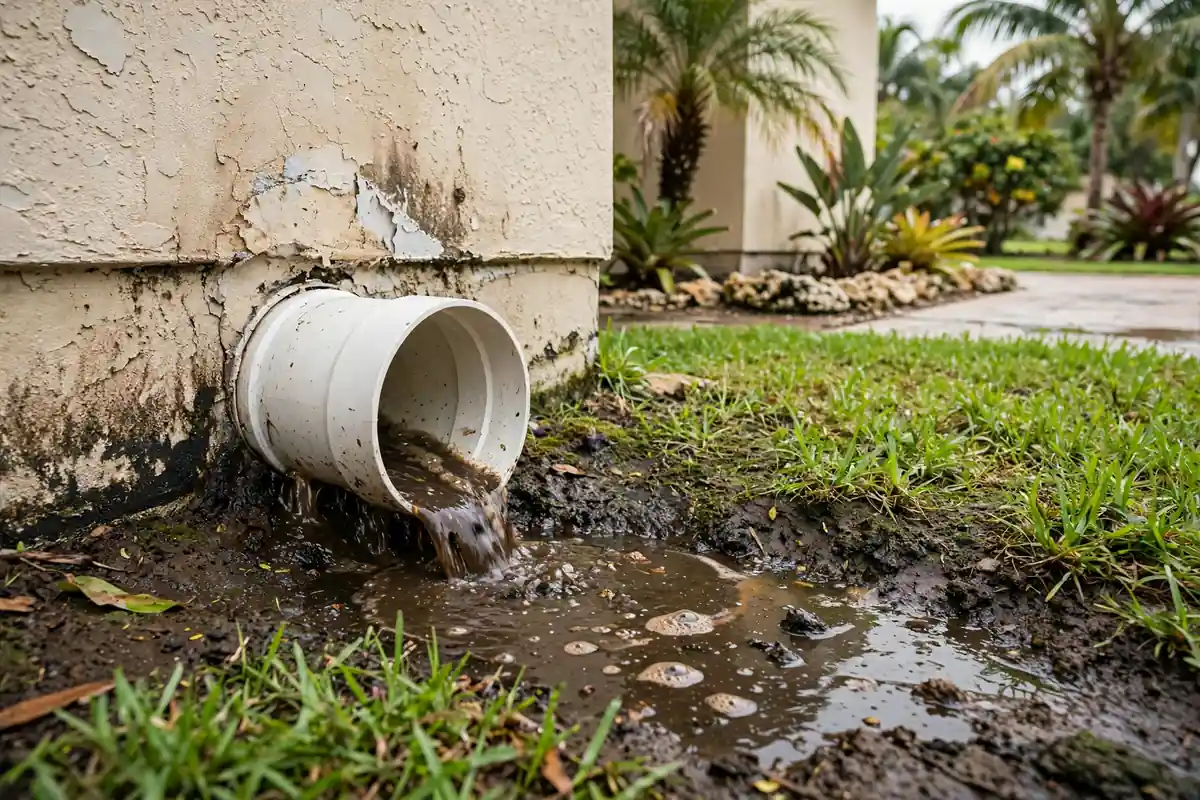
A sewer leak rarely starts as a catastrophe. It starts as a hairline crack, a shifted joint, a pinhole in corroded cast iron — releasing a little wastewater into the soil with every flush. Left alone, that trickle erodes soil, undermines foundations, and grows into the collapse or backup that finally gets your attention.
This guide teaches you to catch leaks in the trickle stage. The warning signs are all around your property if you know where to look: in the lawn, at the foundation, in your water behavior, and in the air. Early detection turns a manageable repair into the emergency it would otherwise become.
Signs in the Yard and Landscaping
The lawn is the most honest leak detector you own. Watch for strips or patches of grass that are conspicuously greener, faster-growing, or lusher than their surroundings — wastewater is nitrogen-rich fertilizer, and the grass over a leak feasts on it. The effect is most visible in the dry season, when the rest of the lawn stresses and the leak-fed patch stays vivid.
Also watch for ground that stays soggy or soft when everything else is dry, slight depressions forming along a line from the house toward the street, and any sewage odor in the yard — especially after rain, when rising groundwater pushes gases up through the leak path. Mark the lateral's route from your property survey and walk it seasonally; the walk takes five minutes.
Signs at the Foundation and Structure
Leaks near the house show up structurally. Hairline cracks in foundation walls or slabs that widen over time, doors or windows that start sticking, and uneven settling of patios or walkways near the lateral's exit point all suggest soil being washed out from below. Chronic leaks erode the soil's load-bearing support grain by grain.
Inside, look for damp spots or efflorescence — white mineral deposits — on basement or ground-floor walls near plumbing exits, and any persistent musty or sewage odor in low rooms. These signs overlap with general water intrusion, so the lateral connection matters: symptoms clustered along the sewer's path point to the sewer, not the roof.
Signs in Your Drains and Water Behavior
A leaking lateral often announces itself through drain behavior before anything is visible outside. Gurgling drains, slow drainage across multiple fixtures, and toilets that bubble when the washer drains all suggest the line is compromised — leaks admit soil and roots, and the resulting partial blockages change the line's hydraulics.
Unexplained lush growth is sometimes paired with an odd companion: a water bill that creeps up without increased usage is a supply-side sign, but on the sewer side the tell is behavioral — fixtures that used to drain fine now hesitate. Trust the change. A drain that worked last year and struggles this year is reporting a developing defect.
Confirming the Suspicion: Detection Methods
Suspicion is not diagnosis, and digging on a hunch is expensive. A camera inspection is the first confirmation step — it finds the crack, the separated joint, or the root mass marking the leak, and locates it to the foot. For leaks that the camera cannot fully characterize, smoke testing pressurizes the line with harmless vapor that escapes through defects and surfaces where the leak breathes.
Dye testing traces flow paths, and acoustic methods listen for the sound of escaping water in pressurized sections. The right test depends on what the camera shows first — which is why detection almost always starts with the camera. Whatever method confirms it, confirm before you excavate.
Acting Early: What to Do This Week
If you recognize two or more signs from this guide, schedule a camera inspection this week — not next season. Bring your observations: where the lush patch is, when the gurgling started, whether rain makes it worse. The technician will correlate your notes with the footage, and the combination pinpoints the leak faster than either alone.
While you wait, avoid the two things that make leaks worse: do not pour grease or harsh chemicals down the drains, and do not park heavy equipment over the lateral's path. Then get the footage, get the recommendation in writing, and fix the trickle before it becomes the torrent. Call Sewer Line Repair Crew at (833) 713-2101 to start with the inspection.
Frequently Asked Questions
How fast can a small sewer leak become a big problem?
It varies — a pinhole in stable soil can seep for years, while a joint leak in sandy, high-water-table soil like South Florida's can erode a void in months. The soil here is unforgiving, which is why early signs deserve prompt action.
Can a sewer leak contaminate my drinking water?
Supply lines are pressurized, which normally keeps contaminants out, but a severe leak near a compromised supply line is a genuine cross-contamination risk. It is another reason leaks near the house get priority treatment.
Will my homeowner's insurance cover leak detection?
Policies differ, but many cover the cost of finding a leak — 'tear-out' coverage — even when they exclude the pipe repair itself. Read your policy's water-damage section or ask your agent specifically about leak-detection coverage.
Do leaks always smell?
No. Small leaks deep in the soil may never produce surface odor — the soil filters the gases. Absence of smell does not mean absence of leak, which is why the lawn and structural signs matter as much as your nose.
Your Local Sewer Line Connection
Reach a Coconut Creek, FL sewer professional in one call — emergency service around the clock.
(833) 713-2101Talk to a specialist now · Free call