
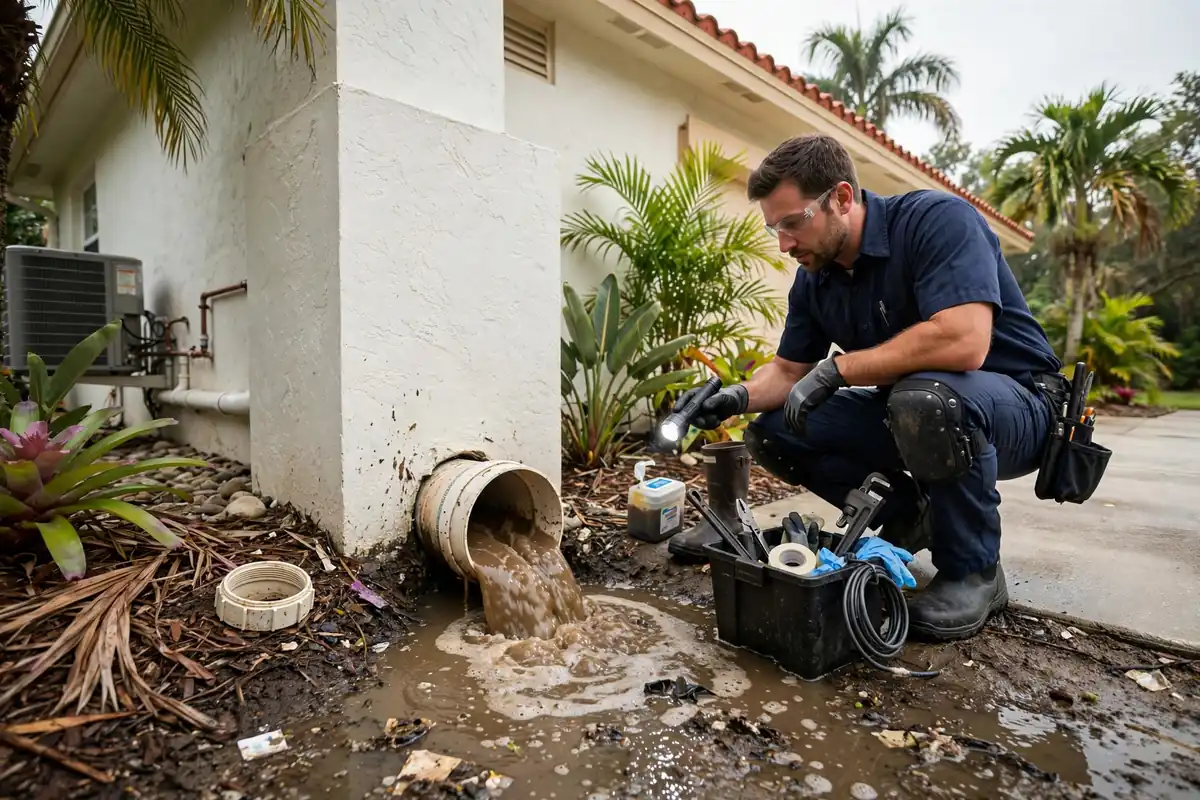
Sewage is rising through a drain in your home. The clock is running — every minute of inaction lets contamination spread and damage deepen. But panic helps nothing; a clear sequence of steps does. This guide gives you that sequence: seven steps, in order, for the first hour of a sewer backup.
Read it now, before you need it. In a real backup you will not have time to research — you will have time to act. Tape the emergency number where the household can find it: Sewer Line Repair Crew, (833) 713-2101, around the clock in Coconut Creek.
Steps 1–2: Protect People, Stop the Water
Step 1: Get everyone away from the affected area. Sewage carries bacteria, viruses, and parasites — keep children, elderly family members, and pets completely clear of standing water and wet floors. If anyone has been in contact with the water, they should wash thoroughly with soap. This is not the moment for bravery; it is the moment for distance.
Step 2: Stop adding water to the system. Do not flush toilets, run faucets, start the dishwasher, or run the washing machine — every gallon you send down has nowhere to go and will join the backup. If you know where your main water shutoff is, you do not need to close it for a drain backup (the supply is not the problem), but halting all drain use is essential.
Steps 3–4: Protect Property, Document Everything
Step 3: Move valuables out of harm's way — but only from dry areas. Carry documents, electronics, and irreplaceable items from unaffected rooms to higher ground. Do not wade through sewage to rescue things from contaminated rooms; no object is worth the exposure. If the backup is near electrical outlets or equipment, stay clear and consider switching off the affected circuit at the breaker panel from a dry location.
Step 4: Photograph and video everything before cleanup begins. Capture standing water levels against walls and furniture, the affected rooms from multiple angles, and close-ups of damaged items — with timestamps on. This documentation is the foundation of any insurance claim and any dispute about the damage's extent. More photos are always better than fewer.
Step 5: Call for Emergency Help
Step 5: Call emergency sewer service now — not after you have tried plunging, not in the morning. Describe what you see: which fixtures are backing up, whether it is still rising, and whether multiple drains are affected. The dispatcher uses that information to prioritize and to send the right equipment.
While you wait, do not use chemical drain cleaners — they will not clear a main-line backup and they create a hazardous mix for the technician. Do not run the garbage disposal. If you have a shop vacuum, you may begin removing standing water only if you can do so safely with protective gear — but professional remediation is the right call for anything beyond a small, contained backup.
Step 6: Contain and Ventilate
Step 6: Limit the spread. Close doors to affected rooms. Lay towels or old blankets at thresholds of dry rooms — barriers you can discard afterward — to slow migration. Open windows and run exhaust fans to ventilate; sewer gas in an enclosed space is a health hazard on top of the water itself.
Keep the household's traffic pattern away from the contaminated zone entirely. If the backup affects the only bathroom, arrange alternatives with a neighbor now rather than improvising later. Containment is unglamorous work, but every square foot you keep dry is a square foot that does not need remediation.
Step 7: Plan the Recovery Before the Crew Leaves
Step 7: When the emergency crew arrives and clears the line, do not let the visit end at 'it's flowing again.' Ask what caused the backup — the camera footage should show it — and whether the fix is permanent or temporary. Get the findings in writing with the video file, and ask what needs to happen next: a spot repair, a cleaning schedule, a full assessment.
Then start the insurance process the same day: call your agent, report the event, and ask specifically about your sewer backup endorsement's claims process. Keep every invoice from the emergency visit onward. The backup was the crisis; the recovery is a project — and projects go better with documentation, a plan, and the right number on the fridge.
Frequently Asked Questions
Should I try to plunge a backing-up toilet myself?
A gentle plunge on a single slow toilet is fine. But when multiple fixtures back up or sewage rises through floor drains, the blockage is in the main line — plunging cannot reach it and can force sewage into other fixtures. Call for help instead.
Is it safe to clean up sewage myself?
For a very small, contained backup, careful DIY cleanup with gloves, boots, eye protection, and disinfectant is reasonable. For anything larger — standing water across rooms, soaked porous materials — professional remediation is strongly recommended due to contamination risk.
How do I know if the backup is my line or the city's main?
You often cannot tell from inside the house — the symptoms look the same. The camera inspection locates the blockage: in your lateral versus at or beyond the street connection. If it is the city's main, report it to the municipality immediately as well.
What should I tell my homeowner's insurance first?
Report promptly with facts only: when you discovered it, what is affected, and what you have done so far. Ask about your backup endorsement coverage and the claims process. Do not speculate about causes — let the inspection report speak.
Sewer Line Problems Don't Wait. Neither Should You.
Call now and get connected with a local sewer line specialist serving Coconut Creek, FL and nearby communities — 24/7.
(833) 713-2101Talk to a specialist now · Free call